IMPACTO Project. The First Step towards the Creation of the National Registry of Emergency and Catastrophe Data in Spain by the General Directorate for Civil Protection and Emergencies
Ángela Potenciano de las Heras – Head of the Natural Hazards Division
General Directorate for Civil Protection and Emergencies
The IMPACTO project is an inter-institutional collaborative initiative aimed at sharing data and statistics on natural and technological events considered priorities for civil protection and causing damage and losses in Spain. The project was co-financed by the European Commission under the EU Civil Protection Mechanism Program (UCPM-2022) and aims to establish a national database on losses and damage caused by disasters in Spain. The project lasted two years and was coordinated by the General Directorate for Civil Protection and Emergencies, with the participation of scientific agencies responsible for monitoring and analysing potentially hazardous natural events, autonomous regions, autonomous cities, and ministries responsible for managing this information on losses and damage. The project resulted in a web platform providing access to a database, being the first step towards the creation of the National Registry of Emergency and Catastrophe Data (Royal Decree 524/2023, of 20 June, approving the Basic Civil Protection Regulation), which will form part of the National Information Network on Civil Protection (Law 17/2015, of 9 July, of the National Civil Protection System).
Background and Regulatory Framework
The IMPACTO platform emerged as a result of a project co-financed by the European Commission under the EU Civil Protection Mechanism Program, UCPM-2022. The project was coordinated by the General Directorate for Civil Protection and Emergencies with the participation of scientific agencies responsible for monitoring potentially hazardous natural events, regional governments, and ministries involved in planning for various risks. As a result, this project addressed the need to create a national database on losses and damage caused by disasters stemming from civil protection risks, as a first step towards establishing the National Registry of Emergency and Disaster Data, which will comply with the “Principle of Relevant Information” set forth in Article 22.2 of Royal Decree 524/2023, of 20 June, approving the Basic Civil Protection Regulation:
The main outcome of this project has therefore been the creation of an interoperable database on the impact of significant emergency events, which will enable the General Directorate for Civil Protection and Emergencies (DGPCE by its initials in Spanish) to establish the National Registry of Emergency and Catastrophe Data (RENEC by its initials in Spanish). Together with other tools and catalogues currently under development, this registry will form the National Civil Protection Information Network (RENAIN by its initials in Spanish), established pursuant to Article 9 of Law 17/2015 of 9 July on the National Civil Protection System.
Article 9. National Information Network on Civil Protection.
-
The National Information Network on Civil Protection is hereby established to help anticipate risks and facilitate an effective response to any situation that requires it, without prejudice to the powers of the regional governments. This Network will enable the National Civil Protection System to:
a) Collect, store, and provide prompt access to information on known emergency risks, as well as on protection measures and available resources for that purpose.
b) Ensure the exchange of information in all actions covered by this title.
-
The Network shall include:
a) The National Map of Civil Protection Risk, as a tool for identifying geographic areas susceptible to damage from emergencies or disasters.
b) The official catalogues of activities that may give rise to a civil protection emergency, including information on the centres, establishments, and facilities where such activities take place, in accordance with the terms established by regulation.
c) The computerized registration of civil protection plans, which will integrate all such plans in accordance with the terms established by regulation.
d) The catalogues of mobilizable resources, understood to mean the human and material resources managed by public administrations or private entities that may be utilized by the National Civil Protection System in the event of an emergency, in accordance with the terms set forth in this law and as established by regulation.
e) The National Registry of Emergency and Catastrophe Data, which shall include information on such events, their consequences and resulting losses, as well as on the resources and procedures used to mitigate them)
f) Any other information necessary to anticipate emergency risks and facilitate the exercise of public administrations’ civil protection responsibilities, in accordance with regulations to be established.
In addition, the IMPACTO project helps generate knowledge at the supranational level, as the design of the data fields considered the requirements of:
-
DRMKC (Disaster Risk Management Knowledge Centre) Risk Data Hub - Joint Research Centre (EU).
-
Sendai Framework Monitoring System (UNISDIR).
To comply with this regulatory requirement, a contract was signed with the company TRAGSA in 2023 to develop the software application. The project was completed at the end of 2025, at which point the system was launched.
The first phase of IMPACTO’s development has made it possible to incorporate the following aspects of the National Registry of Emergency and Catastrophe Data (RENEC), established under Article 9.2(e) of Law 17/2015 on the National Civil Protection System:
-
Information on past catastrophes (Record of significant incidents for civil protection, as set out in the Basic Civil Protection Regulation).
-
Information on the consequences and losses caused:
- Information on fatalities.
- Information on disruptions of basic services and critical infrastructure.
- Information on economic losses.
In addition, IMPACTO will enable the initial estimation of potential damage for each disaster event and the compilation of national disaster statistics.
IMPACTO adheres to the principle of transparency, enabling citizens to access relevant information about disaster events and their IMPACT on people, property, and society at large. It will feature two web portals with different access levels: a public portal (Figure 1), open to the general public to consult and view relevant information on disasters and the resulting damage to people and property, and a restricted access portal (Figure 2), for registered users, with different levels of access. Restricted access allows users not only to upload data on disasters that occur and their consequences but also to carry out analyses and obtain information on the human, social, and economic impacts of disasters.
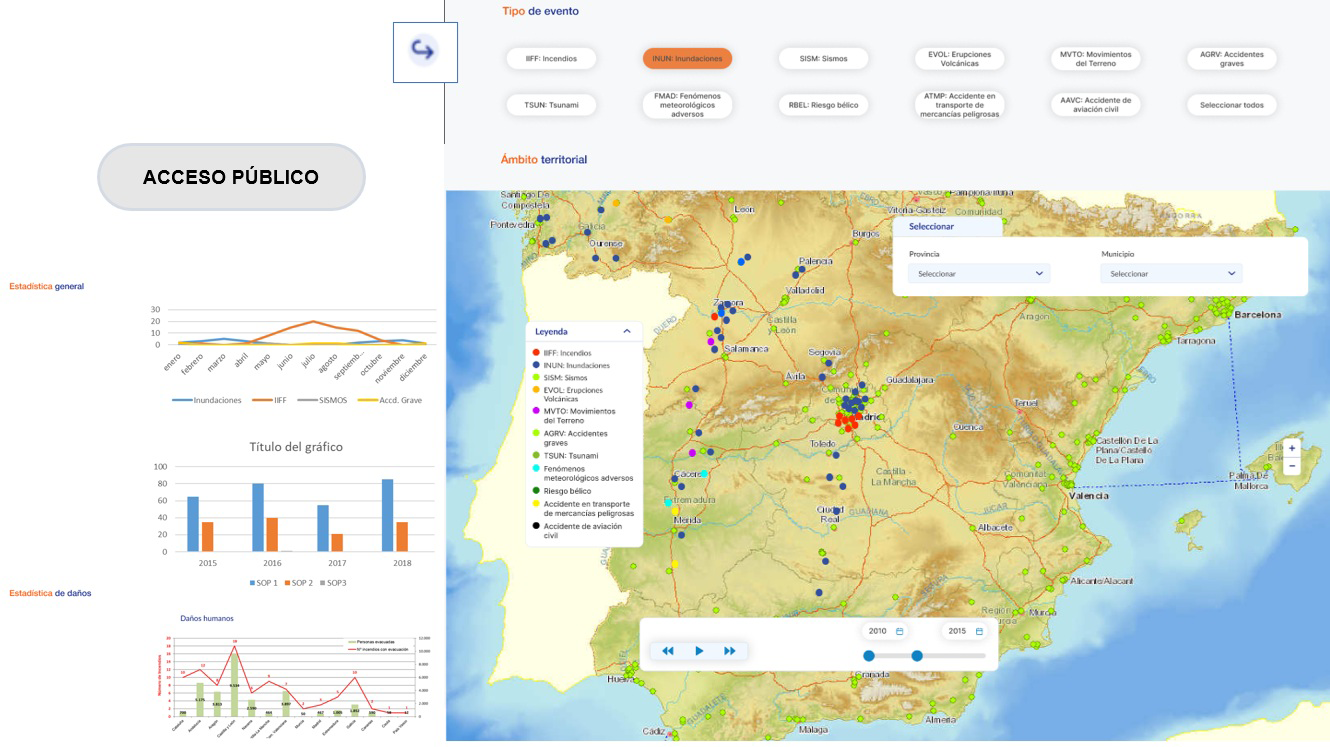
Figure 1. Public access to IMPACTO.
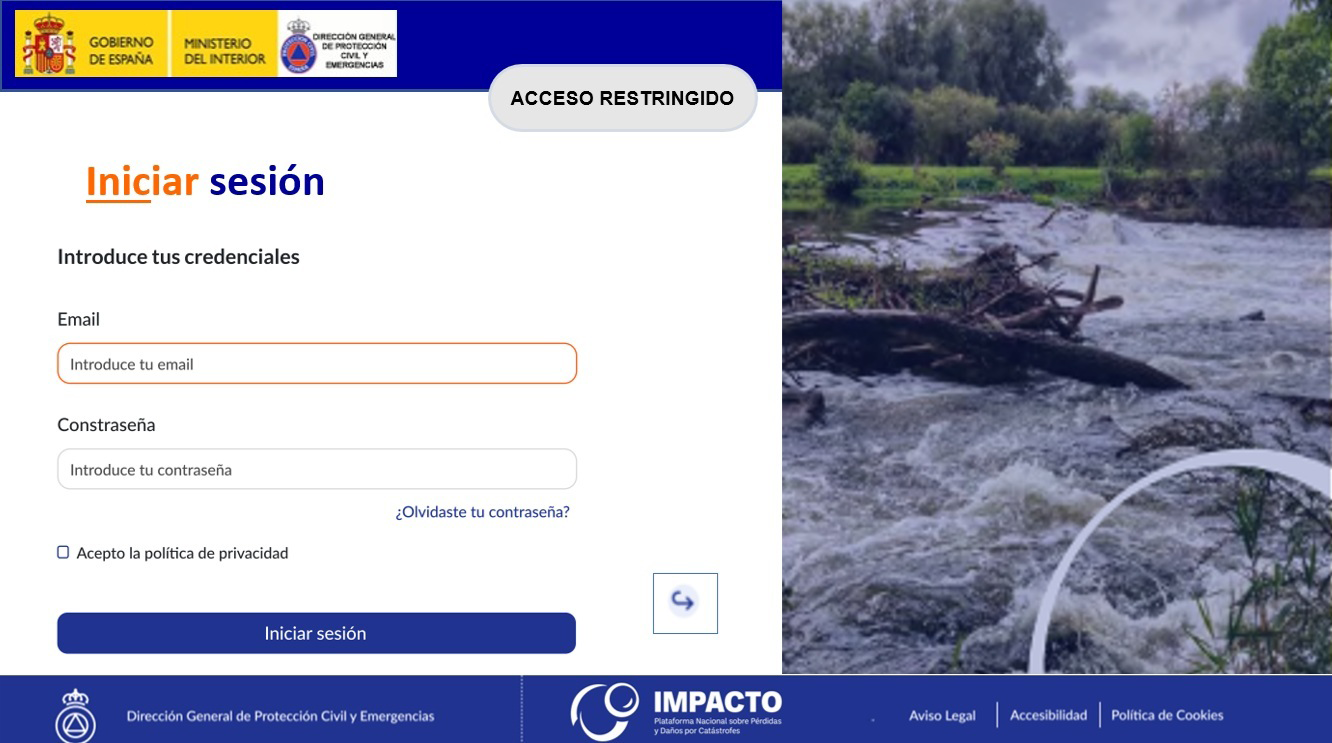
Figure 2. Restricted access to IMPACTO.
Implementation Process and Institutional Coordination
Prior to the platform’s launch, the General Directorate for Civil Protection and Emergencies held a series of coordination and outreach meetings with:
- Civil Protection Units (CPU).
- Regions and cities (CCAA).
- Various agencies within the General State Administration, insurance companies, transportation and energy suppliers, etc., including: State Meteorological Agency (AEMET for its initials in Spanish), General Directorate for Water of the Ministry for Ecological Transition and Demographic Challenge, General Directorate of Cadastre of the Ministry of Finance, National Geographic Institute (IGN for its initials in Spanish) and the National Geographic Information Centre (CNIG for its initials in Spanish) of the Ministry of Transport and Sustainable Mobility, the National Institute of Statistics (INE for its initials in Spanish), Ministry of Territorial Policy and Democratic Memory, State Ports, Spanish Geological Survey (IGME for its initials in Spanish) of the Spanish National Research Council (CSIC for its initials in Spanish), Banco de España (Spanish Central Bank), Agroseguro (the management entity for multi-peril agricultural insurance in Spain), Consorcio de Compensación de Seguros, State Agricultural Insurance Agency (ENESA for its initials in Spanish), Spanish Agricultural Guarantee Fund (FEGA for its initials in Spanish), Railway Infrastructure Administrator (ADIF for its initials in Spanish), Spanish Airports and Air Navigation (AENA for its initials in Spanish), National Railway Network of Spain (RENFE for its initials in Spanish), and Spanish Electricity Grid (REE for its initials in Spanish) (Figure 3). Hereinafter, all of these will be referred to as the participating agencies.
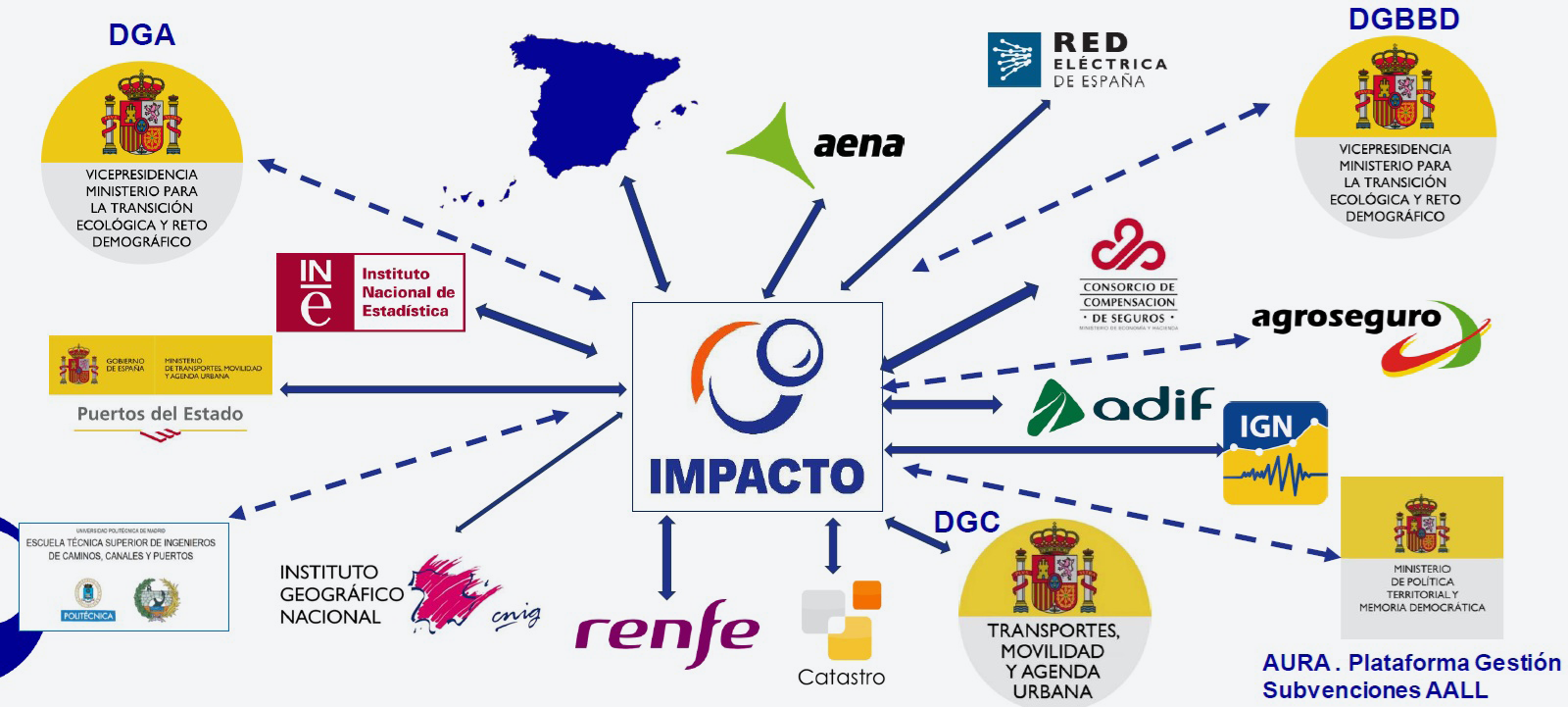
Figure 3. Organizations involved in providing and collecting IMPACTO data.
The goal of these initiatives was to raise awareness of the tool among the agencies involved in providing data, explain how it works, and coordinate the future submission and retrieval of information.
Since IMPACTO went live in late 2025, the various agencies involved have been notified of the platform’s launch, and the necessary data has been collected to manage user registrations and permissions. At the moment of writing, IMPACTO has a total of 338 registered users.
Overview of the IMPACTO Platform
The IMPACTO platform is organized into four main modules (Figure 4), which enable the comprehensive management of civil protection events, as well as the losses and damage associated with them.
Module A: Event Registration
This module allows users to register various events that pose civil protection risks and which, according to the criteria established by the General Directorate for Civil Protection and Emergencies and the regional governments (including loss of life, economic damage, and the activation of response plans, among others), must be recorded on the platform.
The following information must be provided for each event:
- Event name.
- Civil protection plans activated.
- Highest operational level reached.
- Dates of occurrence.
- Geographic location, either by manually entering the affected municipalities or by uploading a geographic layer in shapefile (shp) format.
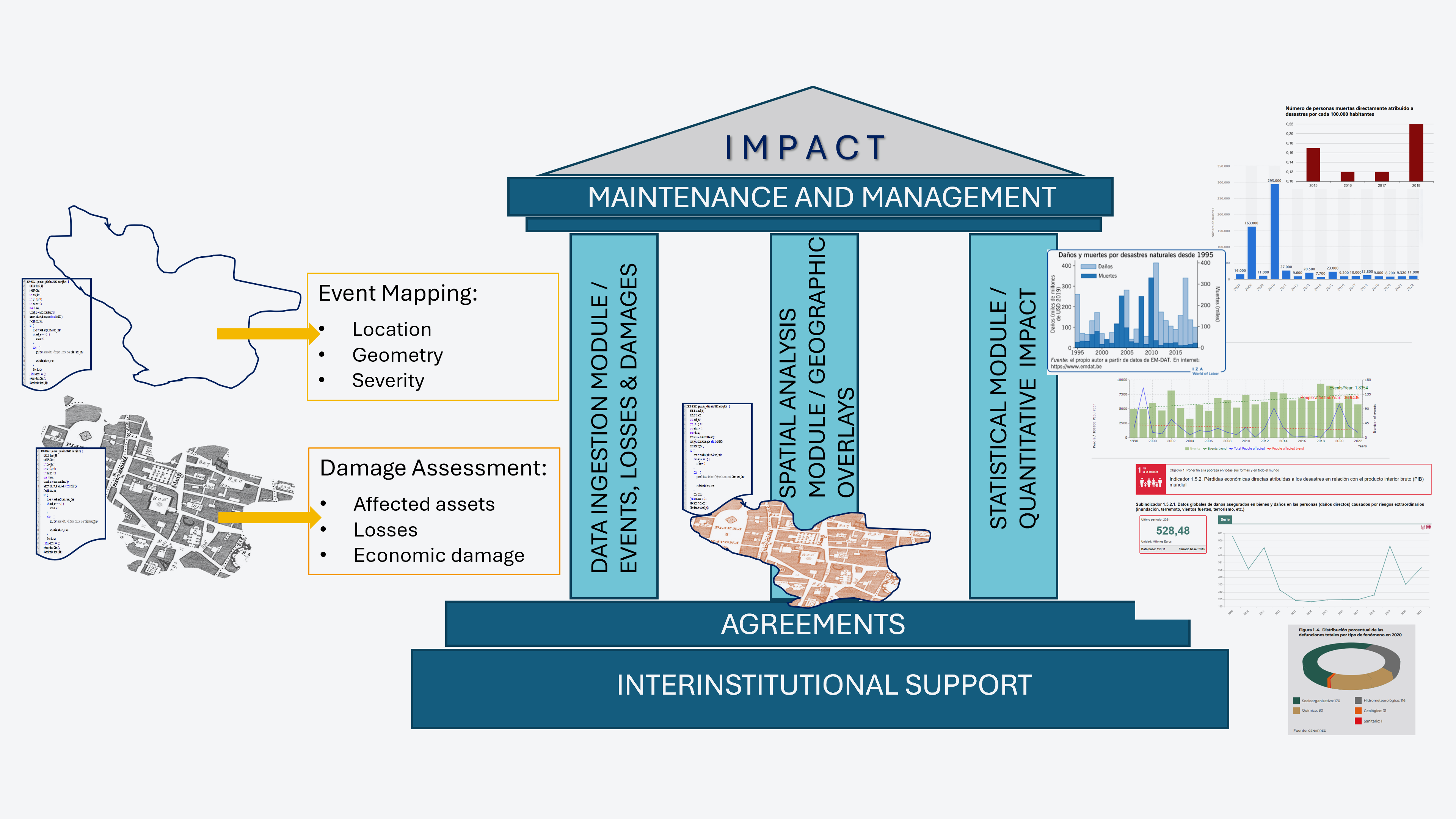
Figure 4. IMPACTO Modules.
Each event is assigned an identification code, the prefix of which corresponds to the type of risk that caused it; this risk type must be selected in the corresponding tab. The types of risk covered are as follows:
- Wildfires.
- Floods.
- Adverse weather events (AWE).
- Tsunami.
- Landslides.
- Volcanic eruptions.
- Accidents involving the transport of hazardous materials.
- Earthquakes.
- Industrial accidents.
Currently, the platform has already recorded the following events:
- 62 wildfires (including those from 2025).
- 16 floods.
- 1 landslide.
- 6 adverse weather events.
- 1 earthquake.
- 2 industrial accidents.
Module B: Data Upload
This module organizes all information related to the losses and damage associated with each event.
Within each event, which is reported by municipality, there are two main tabs:
-
Event details, including the information recorded during registration.
-
Losses and damage, which is further divided into four sections:
-
Human losses: fatalities, injuries, evacuees, people in shelters, people in lockdown, etc.
-
Economic losses:
-
Damage assessment.
-
Losses covered by public subsidies or other sources of funding (emergency expenses, losses due to service interruptions, and replacement costs).
-
-
Interruption of basic services.
-
Interruption of infrastructure.
-
The information can be entered manually or by downloading and then uploading standardised Excel templates.
For this module to function properly, institutional collaboration is essential, involving Civil Protection units, regional governments, and the various agencies involved in providing data and obtaining information from IMPACTO (Figure 3), including Consorcio de Compensación de Seguros, both for reporting damage and for estimating the resulting economic costs.
The greater the level of detail and accuracy of the data provided, the better our understanding of:
- The damage associated with each event.
- Their geographic location.
- The frequency and recurrence of events in specific areas.
This information will enable better preventive planning and more effective decision-making.
Currently, data is entered by the General Directorate of Civil Protection, although it is anticipated that in the future this task may be carried out directly by civil protection units and regional governments using verified information from their respective territories.
Module C: Consultation and Editing
This module allows users to consult and edit the data associated with each event.
Additionally, for flood, earthquake, and wildfire events, the system provides the ability to perform an initial estimate of losses and damage using external tools integrated into the application.
From this module, customised reports for each event can be also downloaded, in both PDF and Word formats, with geographic references (Figure 5).
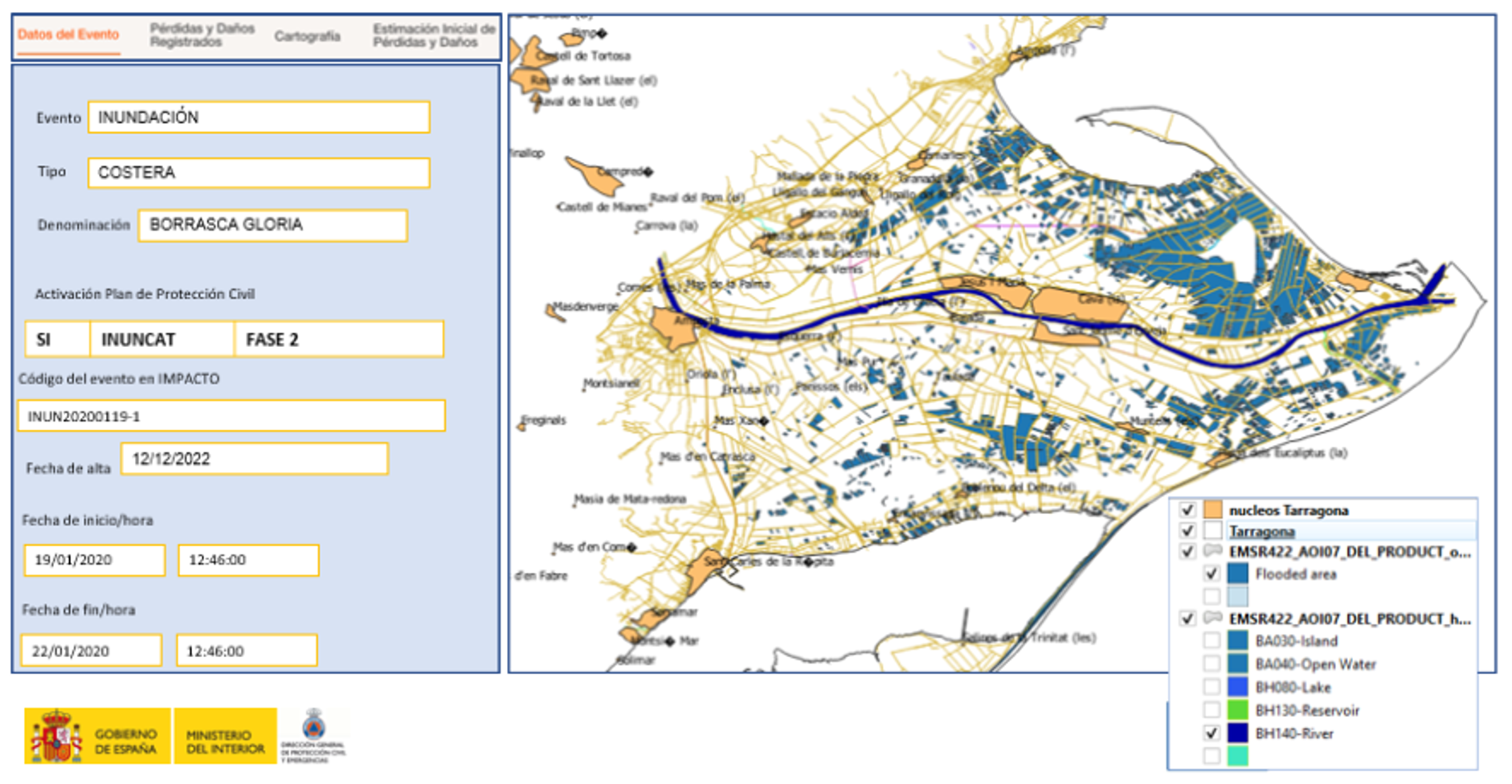
Figure 5. Example of an event display.
Module D: Reports and Statistics
This module enables the statistical analysis of the information stored on the platform, facilitating the creation and download of reports and statistical data for analysis.
Project Development and Inter-institutional Collaboration
The IMPACTO project began to take shape in late 2022 and early 2023, coinciding with the initial contacts and the subsequent signing of the contract with TRAGSA.
Starting in early 2023, presentations of the project were also made to the regional Civil Protection Units, and various agencies, with the aim of:
- Promote the application.
- Jointly define the functional requirements.
- Develop standardised data collection forms for each type of risk.
During this period, meetings were held and contact was maintained with the aforementioned participating agencies. (Figure 6).
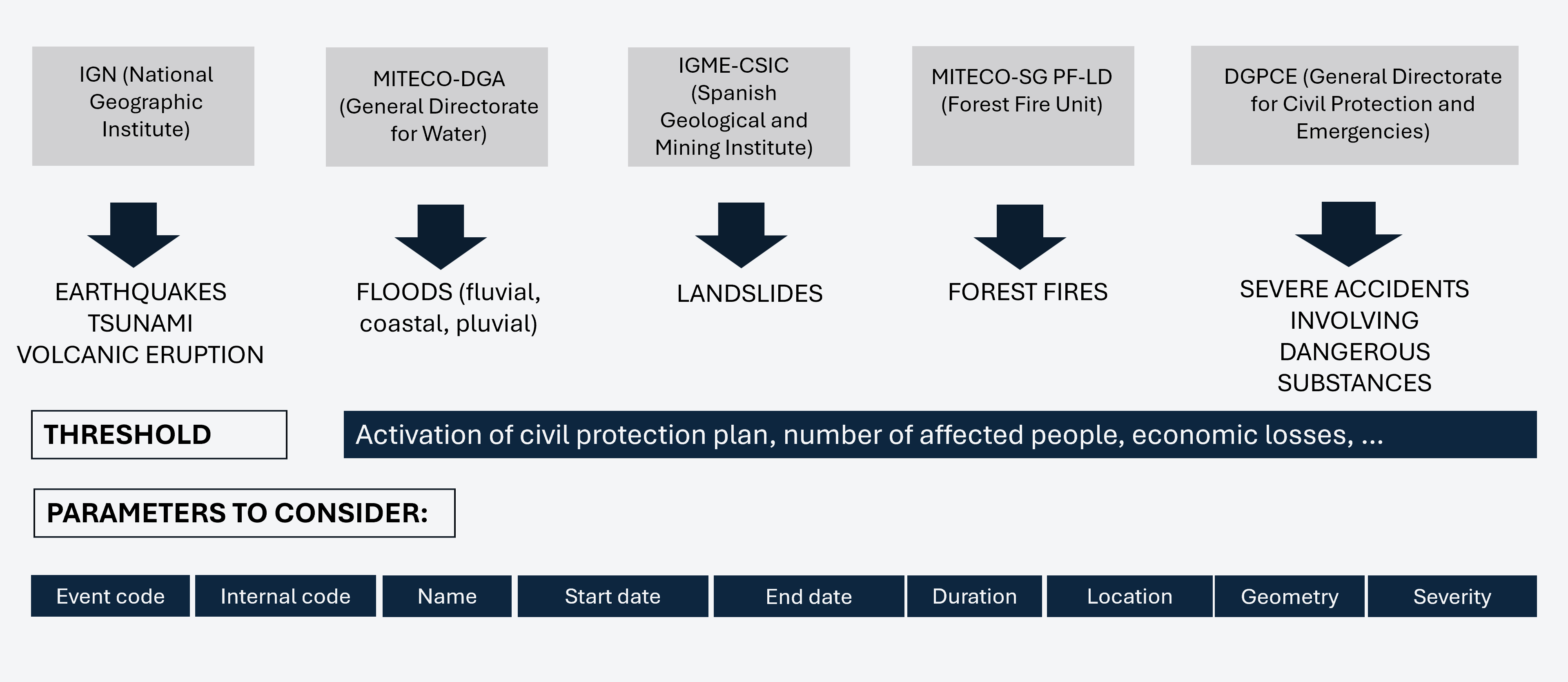
Figure 6. Organizations with which institutional agreements are established for reporting disaster events related to the risks set out in the Basic Civil Protection Regulation.
In addition, in collaboration with these agencies, based on their respective areas of expertise, specific data collection forms were developed for each risk category, including the following (Figure 4):
- Geological events report (IGN).
- Forest fire report (Ministry for Ecological Transition and Demographic Challenge, MITECO).
- Landslide report (IGME).
- Flood report (General Directorate for Water).
The platform was completed by TRAGSA and began operations in late 2025.
Current Situation and Outlook
Given the platform’s short period of operation, the number of recorded events is currently limited, and in many cases, not all loss and damage data is yet available, particularly for the most recent period (2025), due to the complex and labor-intensive nature of the information-gathering process and the closing of each agency’s fiscal years and financial statements, which are necessary to obtain consolidated data.
However, IMPACTO is expected to establish itself as a key strategic tool for:
- Analysing the evolution and frequency of events.
- Identifying the areas with the highest recurrence rates.
- Assessing the damage caused and its economic cost.
- Improve planning and decision-making in civil protection matter.
All of this will help minimise, as much as possible, the effects of these events, even if it is not possible to prevent them from occurring, especially when it comes to natural hazards.

Since IMPACTO went live in late 2025, the various agencies involved have been notified of the platform’s launch, and the necessary data has been collected to manage user registrations and permissions. At the moment of writing, IMPACTO has a total of 338 registered users.