A Roadmap for the Adaptation of the Insurance Sector to Climate Change: from Compensating for Damage to Prevention, Using the Example of Large-scale Restoration
Arturo Elosegi, Miriam Colls - University of the Basque Country
Florentina Nanu - BDP Group, Romania
Camelia Ionescu - WWF Romania
Mia Ebeltoft - Climate Risk Advisory, Norway
Kirsty Blackstock, Esther Carmen - James Hutton Institute, Scotland
Eva Hernández - Wetlands International Global Office, Netherlands
Anna Berczi-Siket - WWF Hungary
Elena López Gunn - Elcano Royal Institute
Insurance has historically been an essential tool for compensating for damage and facilitating recovery following extreme events. However, the growing losses associated with climate change means that this role should be expanded to not only cover losses after a disaster, but also to explore how to help reduce risk through prevention. Drawing on MERLIN (1)MERLIN was a research and innovation project funded by the European Commission’s Horizon 2020 programme under grant agreement no. 101036337. Acknowledgements: We would particularly like to thank Sebastian Birk and Daniel Hering, the project coordinators, for their support and collaboration throughout the project.–a European project focused on large-scale river ecosystem restoration–this article analyses how the insurance sector can support prevention through restoration, the sharing of claims data, risk modelling, incentives for resilient investment, and collaboration at the regional level. The case of the Basque Country illustrates how river restoration can be linked to hazard mapping, economic exposure, avoided losses and cost-benefit analysis. The case of Romania examines this perspective for agricultural insurance in the Danube basin, whilst Hungary’s recent experience broadens the discussion to include the protection gap, future insurability, and the role of nature-based solutions. The article concludes by stating that insurance is no substitute for public planning or ecological restoration, but it can become a key element in guiding preventive decisions if it is underpinned by verifiable evidence, shared governance and measures sustained over time.
Introduction: Insurance in the face of a changing climate
For decades, insurance has fulfilled a fundamental compensatory role: absorbing financial losses and facilitating recovery following extreme events. This role remains indispensable: it provides liquidity, enables the replacement of damaged property, and helps households, businesses and public authorities to begin the recovery process after a disaster. However, climate change is altering the boundary conditions under which the insurance sector operates. Increased exposure, accumulated vulnerability in certain regions and the intensification of extreme events mean that the question is no longer just how to provide better compensation, but how to reduce risk before damage occurs (IPCC, 2022).
The cut-off low of October 2024 clearly demonstrated the scale of this challenge in Spain. As of 27 March 2026, Consorcio de Compensación de Seguros had recorded 251,549 claims, with €4.378 billion paid out and an estimated total cost of around €4.8 billion (Consorcio de Compensación de Seguros, 2026a). The event confirmed the Spanish insurance system’s capacity to respond to a large-scale disaster, but it also highlighted the limitations of a strategy focused solely on compensating for damage once it has occurred.
This tension is not unique to Spain. At European level, it is deemed that only between a third and half of all climate-related losses were insured in 2025 (Gallagher Re, 2026; Swiss Re, 2026). The protection gap cannot be closed by more policies alone. It also requires addressing the factors that shape risk: hazard, exposure, vulnerability, resilience, land-use planning, and the maintenance of natural and built infrastructure.
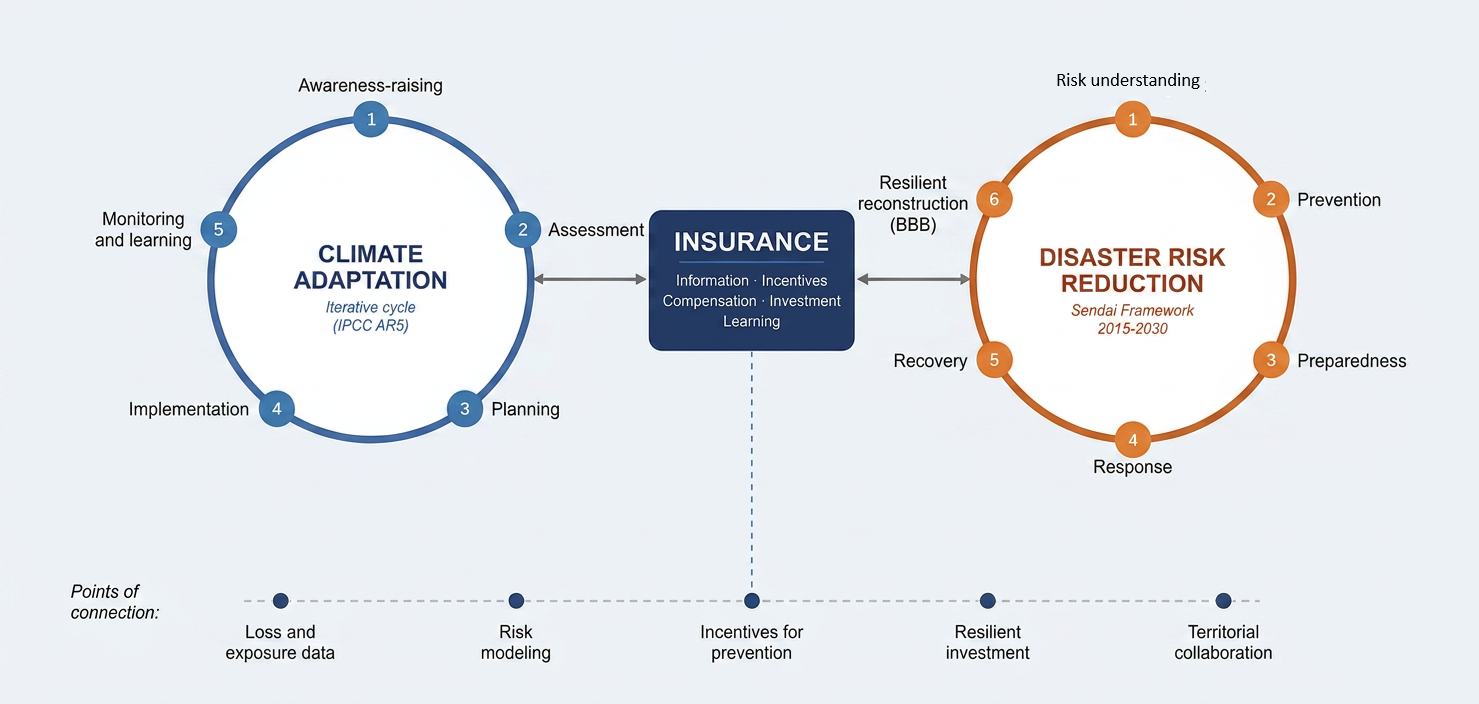
Figure 1. Connection between the climate adaptation cycle and the disaster risk reduction cycle, with the articulating role of insurance.
Source: compiled by the authors based on IPCC (2022) and UNDRR (2015).
Figure 1 summarises this idea. The climate adaptation cycle and the disaster risk reduction cycle are often treated as separate entities, but they share the same objective: to reduce current and future damage. Insurance can act as a bridge when its data, models, incentives and lessons learnt are linked to decisions on adaptation, prevention and resilient reconstruction.
The need for action on prevention
The insurance sector has a clear opportunity to address the challenges of climate change and uncertainty, for three main reasons:
- Social Responsibility and Sector Image: Insurance can play an active role in risk reduction. When risks are too high and cover is withdrawn, the socio-economic consequences for citizens, SMEs, insured sectors and governments are severe, negatively impacting on the industry’s image and purpose.
- Product and Market Sustainability: Globally–although not in Spain, due to its mutual model–the areas where climate risks are not insured, whilst currently few and far between, are set to increase. It is essential for the sector not only to explore new products, but also to ensure the continuity of the markets and products it already manages.
- Mitigation of Investment and Operational Risk: Insurers are major investors, and risk concentration has a direct impact on their portfolios. Extreme weather events threaten both their investments (one of their core business lines) and policyholders’ availability to pay premiums, thereby jeopardising their business model.
Prevention at a regional level: what MERLIN reveals
MERLIN’s experience helps to answer a specific question for the insurance sector: what happens if certain large-scale restoration projects are viewed not only as environmental conservation, but also as measures capable of reducing future damage; in other words, as ecosystem-based adaptation or disaster risk reduction measures? In this context, it is important to highlight that the current draft of the second work programme of Spain’s National Climate Change Adaptation Plan (PNACC for its initials in Spanish) has identified restoration as an adaptation measure, aligned with the National Restoration Plan due to be published in September 2026, in line with EU Regulation 2024/1991. Therefore, at the regulatory level, this type of measure has already been identified as a key adaptation investment measure for risk reduction and adaptation to climate change.
One such initiative is MERLIN, a European Horizon 2020 project dedicated to the large-scale restoration of freshwater ecosystems. Rivers, wetlands, floodplains and other aquatic systems were studied in various European contexts, with the aim of demonstrating how restoration can generate environmental, social and economic benefits. One of the key sectors identified for analysis regarding its potential role in large-scale environmental restoration was the insurance sector. Specifically, how, when and where land restoration can form part of a prevention strategy when it helps to reduce exposure, vulnerability or potential losses (Pott et al., 2025).
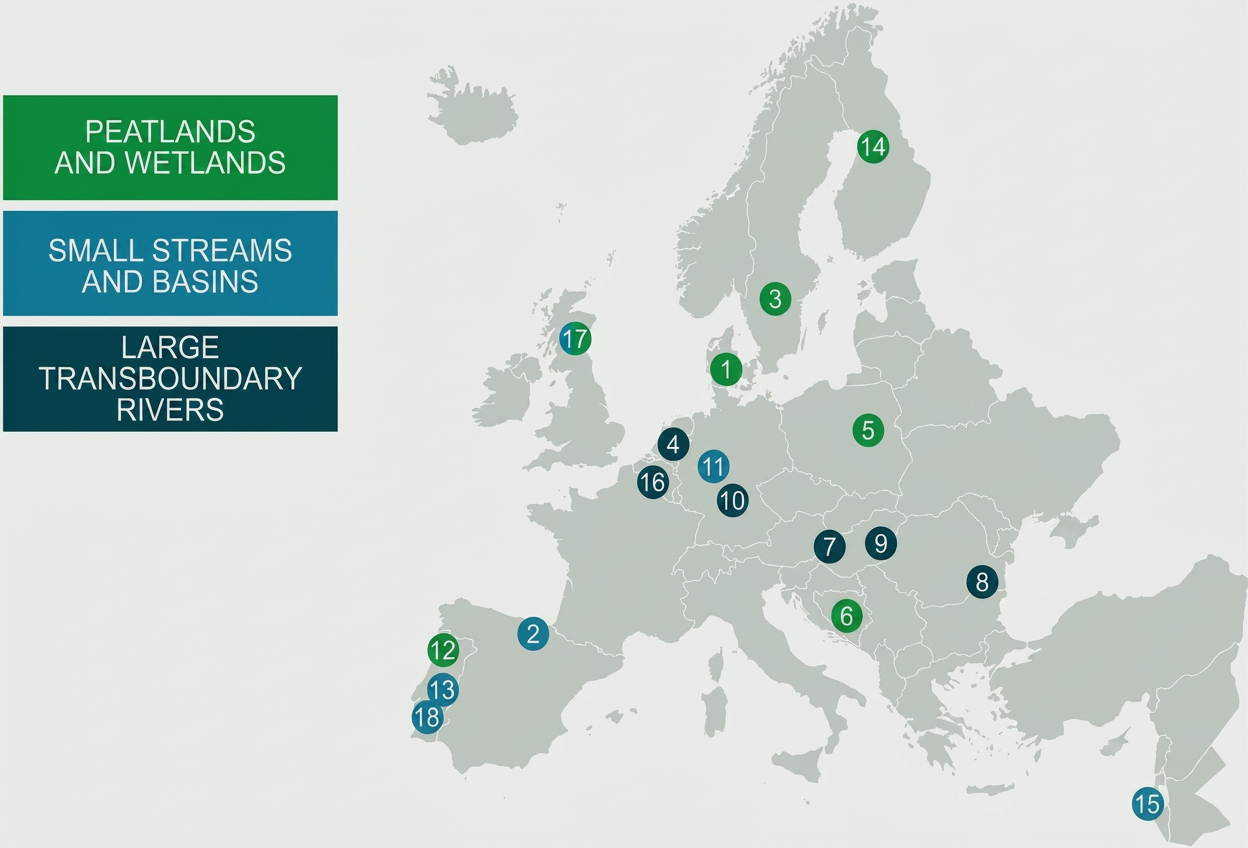
Figure 2. Location of MERLIN case studies in Europe: peatlands and wetlands, small catchments and large transboundary rivers. The case study on the Basque Country (Deba River), analysed in this article, is situated in the north of the Iberian Peninsula (2).
Source: MERLIN.
The restoration of certain ecosystems can act as part of a region’s disaster prevention infrastructure. Wetlands, floodplains and riparian vegetation do not eliminate the risk, but they can mitigate the associated impacts and damage by retaining water, reducing flow velocities, stabilising banks and buffering flood peaks. The assessment carried out in MERLIN shows that interventions to restore riverine ecosystems, such as wetlands, can generate multiple quantifiable environmental, social and economic benefits, including positive contributions to resilience against floods and droughts. It has also been documented how the magnitude of these effects and the associated level of confidence vary from case to case and depend on the type of measure, the territorial context, the availability of follow-up data and maintenance over time (Schwerk et al., 2025). Therefore, this contribution must be demonstrated on a case-by-case basis through monitoring, indicators and evaluation of results.
MERLIN’s methodology for large-scale restoration was based on an active model of dialogue with sectors operating within the region and involved in risk management: water, agriculture, energy, shipping, urban planning and insurance. In other words, a framework of shared risks that cannot be viewed as an exclusively environmental issue. Within this framework, insurance emerges as a cross-cutting sector that does not necessarily carry out the restoration itself, but can help to assess, incentivise or finance measures that reduce future losses (Blackstock et al., 2025; Vion Loisel et al., 2025).
Therefore, the key question is not whether a measure is ‘green’, but whether such measures demonstrably alter any risk variables. For the insurance sector, this requires translating restoration into operational information: what damage it can prevent, under what scenarios, with what degree of uncertainty, who is responsible for maintaining the measure, and for how long it retains its protective or risk-mitigating function.
The insurance sector’s roadmap: from compensation to prevention
The insurance sector’s roadmap developed within MERLIN translates the preventive value of restoration into the sector’s own decision-making processes: data, pricing, terms of cover, investment and public-private partnerships. It does not propose that insurers become restoration practitioners, but rather that they use their knowledge and technical and financial expertise in risk management to recognise when a territorial restoration measure reduces expected losses (Vion Loisel et al., 2025).
From there, the roadmap for the insurance sector as a potential player in large-scale restoration can be broken down into seven key elements:
-
Improving the use of loss data. Each claim generates information on the causes of the damage, its location, the type of asset affected, cost, recurrence and speed of recovery. Taken together, this data enables the identification of regional risk patterns and guides preventive decisions. To be useful beyond the individual claim management, it must be possible to aggregate, analyse and share this data in a manner that is compatible with confidentiality and data protection. In this case, information on losses of natural capital, ecosystem services and their functions would also be included.
-
Comparing the costs and benefits of different risk-reduction measures. Prevention is not decided in the abstract. Public authorities, businesses and insurers need to compare alternatives. In this case, the key distinction lies in which measures restoration includes as a preventive measure, and, above all, large-scale restoration as an additional and/or complementary measure to grey infrastructure, hybrid measures, early-warning systems, land-use changes or structural improvements. The insurance sector can contribute its expertise in estimating expected losses and scenario analysis, provided that the measures translate into variables relevant to risk. Meanwhile, the environmental sector can contribute its knowledge of how ecosystems function and of large-scale restoration, for example, in terms of its capacity for hydrological regulation.
-
Developing metrics and standards. Many restoration initiatives generate multiple benefits or co-benefits such as biodiversity, water quality, recreation, carbon sequestration or social cohesion. However, the insurance industry needs to understand specifically how large-scale restoration contributes to reducing damage, that is, as a preventive measure. This requires baselines, monitoring, comparable models and methodologies enabling the estimation of avoided losses or reduced exposure (Johannes-Gold et al., 2026).
-
Incorporating preventive signals into insurance strategies and financial policies. If a measure demonstrably reduces risk, this should be reflected in coverage terms, technical recommendations, discounts, deductibles or support for vulnerability reduction schemes. This step requires analysis and innovation at sector level, as many large-scale restoration measures and nature-based solutions generate collective benefits that cannot always be attributed to a single insurer.
-
Reviewing portfolios and exposure. Climate change is altering the frequency, intensity or spatial distribution of certain risks. This review should not merely lead to an increase in cost or the withdrawal of coverage, but also to the identification of where preventive measures are most urgent and/or where they can have the greatest impact on risk reduction.
-
Promoting innovative products and instruments. Parametric insurance, coverage subject to adaptation measures, resilient recovery mechanisms and schemes associated with natural assets are possible examples of innovative insurance products (Luque Armand et al., 2026). However, their viability depends on a clear relationship between the risk covered, the beneficiary, the payer, the trigger mechanism and the preventive measure.
-
Exploring investment opportunities linked to large-scale restoration and resilience. Insurers are key players in financial markets. Ecological restoration presents certain challenges: distributed benefits, long time horizons, uncertainty, maintenance and revenue models that are still not well established. Consequently, the role of insurance as an investor is strengthened when viewed as part of broader financing schemes, for example, public-private partnerships.
The MERLIN roadmap and the seven elements are illustrated in Figure 3:
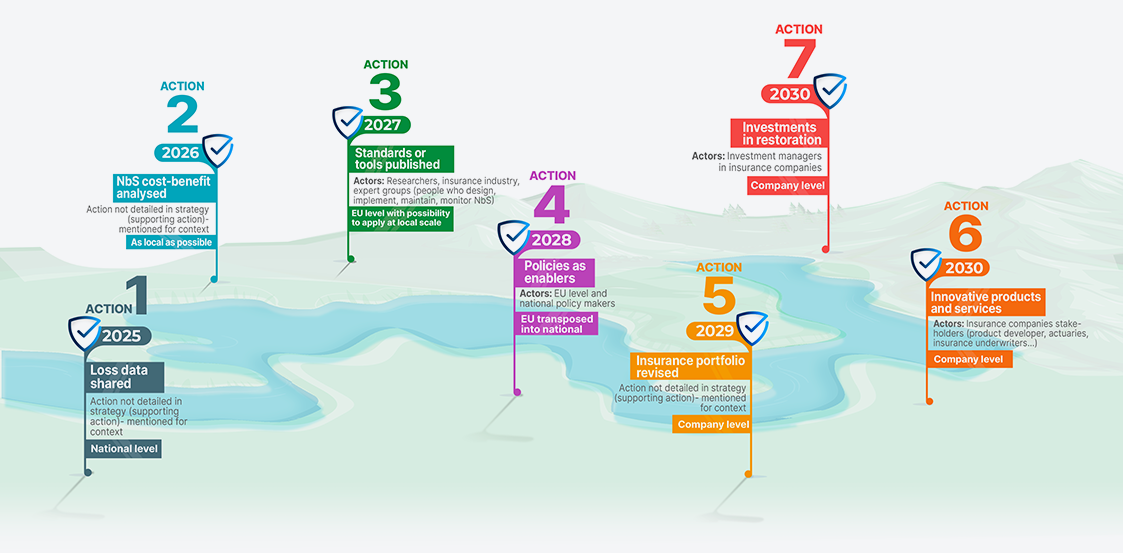
Figure 3. Schematic infographic of the seven elements of the insurance sector’s roadmap for large-scale ecosystem restoration.
Source: Vion Loisel et al., 2025.
This one is complemented by Figure 4, which illustrates the turning point: a claim file need not end solely with compensation. If loss information is aggregated and analysed at a regional level, it can guide preventive measures, prioritise investments and inform future decisions. In this way, insurance retains its compensatory function but adds a learning layer to reduce recurring losses.
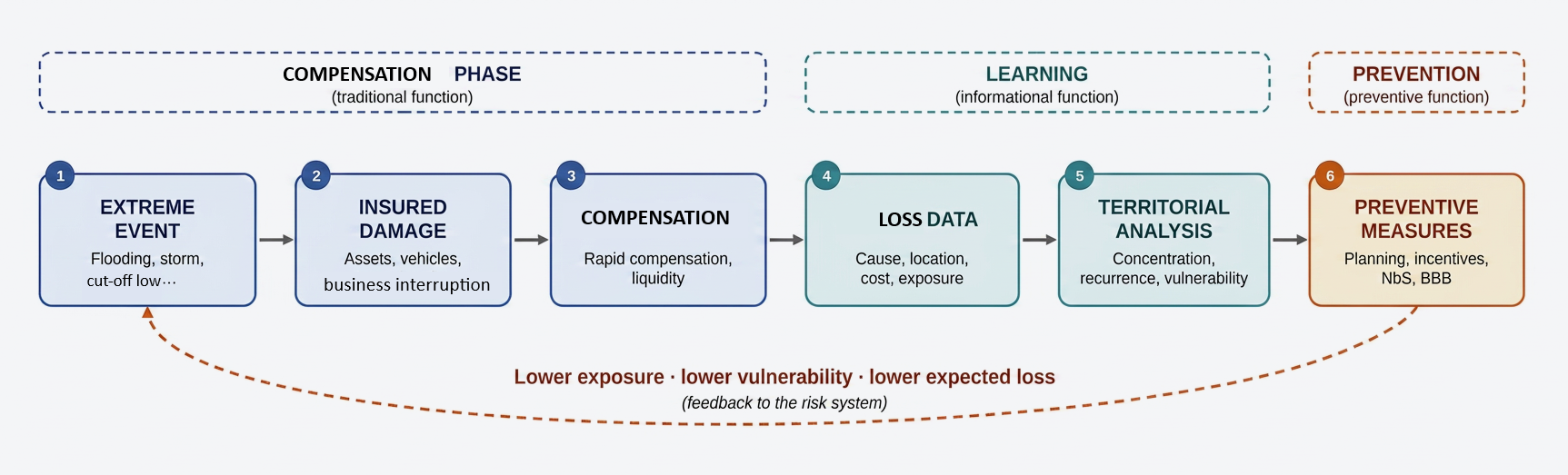
Figure 4. From loss to prevention: insurance learning and feedback cycle.
Source: compiled by the authors based on Consorseguros (2022), UNDRR (2015), IPCC (2022) and Luque Armand et al. (2026).
Examples of restoration for prevention
The Basque Country: river restoration and insurance-based risk prevention
The Basque Country case study in MERLIN helps to clarify the link between ecological restoration, risk reduction, and the potential involvement of the insurance sector. This case focused on the hydro-geomorphological restoration of the Deba River, a basin of approximately 534 km², with a main river channel of 62 km and an associated population of around 135,000 people. The project was carried out with the University of the Basque Country/Euskal Herriko Unibersitatea (UPV/EHU) as the scientific partner, and the Provincial Council of Gipuzkoa as the implementing partner (MERLIN, 2025).
The project was not limited to a single intervention. MERLIN proposed a basin-wide restoration based on the total or partial removal of obsolete obstacles, the restoration of river dynamics, the improvement of river connectivity, and the restoration of associated habitats. Unlike projects focused on a single point, the Basque case addressed ten obstacles located on the main river channel, covering a stretch of river over 30 km long (MERLIN, 2025).
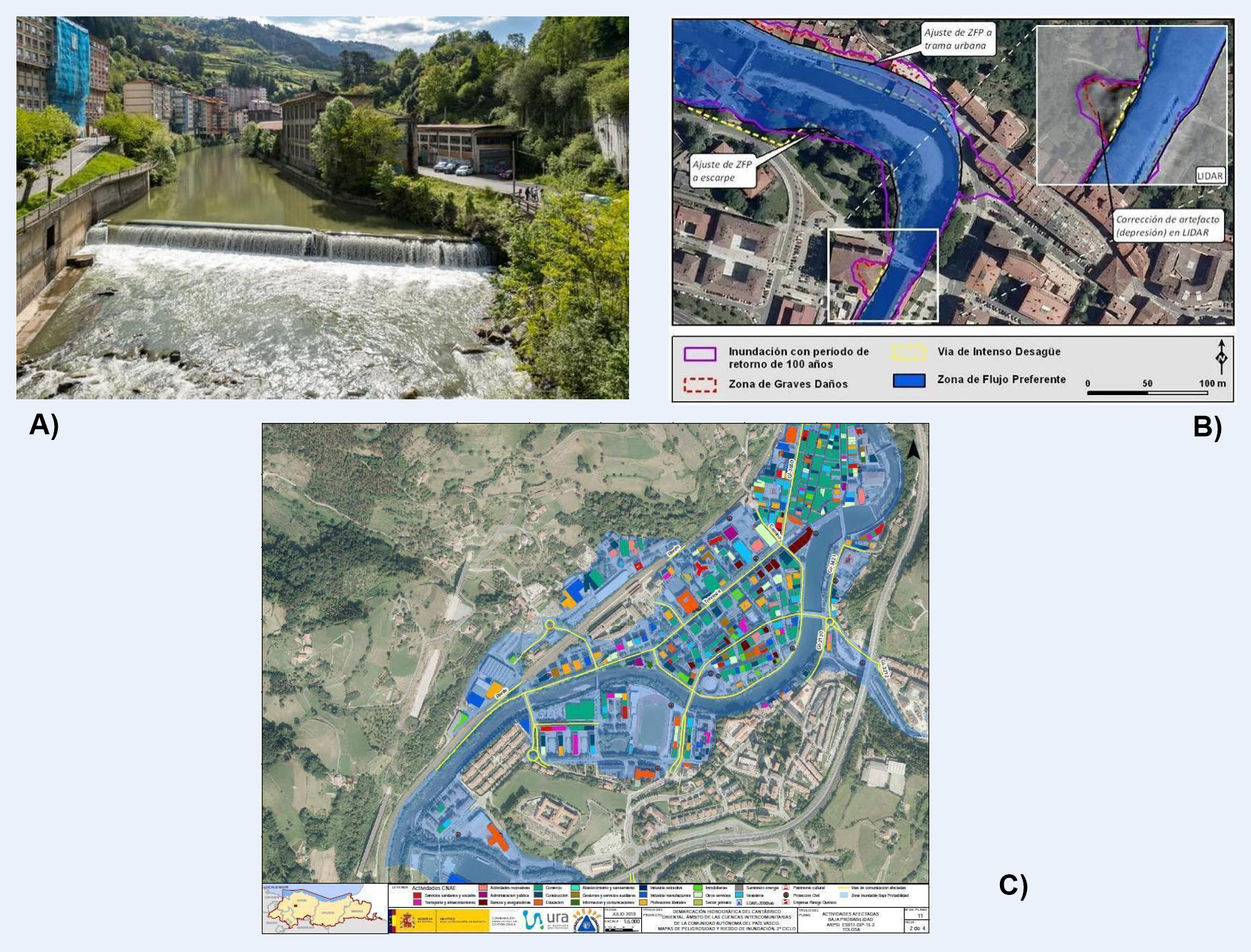
Figure 5. From regional planning to flood prevention in the case of the Deba River.
A) The Deba River with a weir, the type of obstacle targeted by hydro-geomorphological restoration in the Basque Country (MERLIN).
B) Delimitation of the Preferential Floodway in Bergara.
C) Economic activities located within the Tolosa APSFR.
Source: MERLIN and Confederación Hidrográfica del Cantábrico (Bay of Biscay River Basin Authority) (2022a, 2022b).
Figure 5 allows the case to be interpreted on three levels. Image A shows the type of physical obstacle addressed by the hydro-geomorphological restoration. Image B links this intervention to the delineation of preferential floodway areas and hazard. Removing a weir lowers the base water level in the impounded area, thereby reducing the risk of flooding, particularly for the most frequent floods, which are of medium to moderate magnitude. Image C incorporates the economic exposure in potentially flood-prone areas. This sequence is important because it demonstrates how an ecological restoration project is also a prevention project: intervention, threat, exposure and potential damage reduction.
In Soraluze (town in the Basque province of Gipuzkoa), the Flood Risk Management Plan (FRMP) and its Annex 3 document the use of hydraulic modelling, hazard mapping and specific measures–such as the lowering of weirs and the replacement of a footbridge–to reduce flood risk. The technical analysis estimated a reduction in water depth of more than one metre for the 50-year design period and an annual economic benefit of €1.55 million against an investment of €1.31 million (Bay of Biscay River Basin Authority, 2022a).
The case of Tolosa (town in the Basque province of Gipuzkoa) provides further evidence. The FRMP identifies flood defence measures for the old town and town centre, including the replacement of the Puente Nuevo (New Bridge) with a bridge with greater hydraulic capacity. The planned measures involve an investment of €4.1 million, a 100-year return period for flood protection and estimated annual economic losses avoided of €2.33 million (Bay of Biscay River Basin Authority, 2022a). One detail that goes beyond mere anecdote is that, both in Soraluze and Tolosa, pressure groups were formed to defend the statu quo in both municipalities, namely the weirs in Soraluze and the Puente Nuevo in Tolosa.
In the latter case, the Town Council organised an information campaign in October 2024, involving experts–including the MERLIN project–to explain to the public the need to implement the measures set out in the flood prevention plans of URA, the Basque Water Agency. The outcome of this campaign was not as positive as expected. However, a couple of weeks later, a cut-off low swept through numerous municipalities in the province of Valencia. This extreme event may have influenced the perception of risk at both public and institutional levels, with the result that in 2025 Tolosa Town Council agreed to replace the Puente Nuevo.
As regards the role of the insurance sector, the key step is establishing a link between intervention, hydraulic changes, and avoided losses; to this is added the decisive factor of social acceptability, stemming from a better risk perception, underpinned by a political commitment to action on prevention, rather than polarisation. Without such evidence, the initiative remains an environmental narrative that is difficult to incorporate or appears distant or disconnected from insurance decisions. When this relationship is documented, restoration and hybrid measures can play a key role as robust measures for flood risk reduction, investment prioritisation, coverage conditions, or resilient recovery to rebuild and adapt in the long term.
Romania: watershed restoration and insurance-based prevention
The agricultural insurance sector in Romania faces complex challenges, particularly in the Danube basin, against a backdrop of global uncertainty and extreme caution regarding spending on the part of customers. Agriculture is going through a period considered one of the most difficult in the last 20 years, characterised by low-value assets and limited financial literacy among farmers regarding the potential of insurance. Although policy take-up is on the rise, economic difficulties are limiting penetration, leading farmers to insure only those crops with the highest income potential.
Prevention plays a key role, although its integration is slow. The incorporation of Nature-based Solutions (NbS) as risk-reduction measures is seen as a step towards the future, requiring a better understanding and documented evidence of their impact before they can be included in risk management advice to clients. There is considerable reluctance among landowners to adopt ecological solutions involving changes in land use, particularly in fertile areas, due to a lack of information regarding investment, maintenance and the actual impact on risk mitigation.
Awareness of the benefits of insurance is growing rapidly thanks to subsidised schemes and insurance requirements linked to European Union funding for agriculture. Farmers, who initially take out policies out of obligation, are gradually coming to appreciate that insurance acts as a form of financial protection, with this process happening more quickly on large farms. The Romanian insurance industry is diversifying its range of products for the agricultural market, seeking to make insurance more affordable and thereby increase market penetration.
A key strategy for fostering resilience and encouraging adaptation measures is to expand the use of rapid-payout parametric microinsurance products linked to events such as excessive rainfall or drought. Implemented across the landscape in the Danube basin, these could provide pooled cover for smallholder farms against loss of income or yields. This would help them build collective resilience and, in turn, the capacity to take on the additional risk involved in changing agricultural practices. Success stories, such as that of Bistret-Potelu, demonstrate the potential of combining public and private funding with innovative insurance measures to drive climate adaptation strategies based on regenerative agriculture at the catchment level and, for example, restore soil moisture.
Hungary: insurability, drought and nature as preventive infrastructure
Hungary’s recent experience shows that the increase in extreme events is straining the relationship between climate risk, insurability and prevention in many European Union countries. Floods, droughts and heatwaves are causing damage that is increasingly difficult to anticipate, whilst degraded ecosystems are losing their ability to cushion the impacts of a more extreme climate. In this context, the protection gap is no longer merely an insurance indicator: it can also become a sign of economic and territorial vulnerability (Bérczi-Siket, Gyura and Vigh, 2026).
The Hungarian case is particularly illustrative of the link between drought, agriculture and the availability of insurance cover. A recent study published by WWF Hungary and HUSIF (2)Hungarian Sustainable Investment and Finance Association. notes that, following the record drought of 2022, certain drought-related risks have become more difficult to insure against in the most exposed areas of the east of the country. Such situations foreshadow a dilemma that is becoming increasingly prevalent in Europe, though not in Spain thanks to its insurance model. If the risk increases and is not reduced at source, insurance may become more expensive, coverage may be limited, or it may be withdrawn from certain sectors or areas. Currently, the exposure of ecosystems to drought is continuously monitored via the interactive map Exposure of European Ecosystems to Drought by WISE Freshwater (EEA, 2026).
In this context, large-scale river ecosystem restoration and nature-based solutions are not presented as a one-size-fits-all solution, but as a way of addressing the root causes of risk. In the event of drought, for example, wetland restoration, soil rehabilitation, and improved water retention and infiltration can help reduce vulnerability and the exposure of both agricultural production and the wider territory. The challenge lies in demonstrating this effect under real-world conditions: local data, baselines, permits, cooperation between landowners, maintenance and monitoring.
The Nature Restoration Regulation reinforces this argument by setting European restoration targets for 2030 and 2050 and by recognising restoration as an investment in the European Union’s long-term resilience (Regulation (EU) 2024/1991). The potential benefit and opportunity for the insurance sector is that future insurability will increasingly depend on what happens before the loss. If risk is not reduced at source, insurers will have less scope to maintain affordable cover. If there is demonstrable prevention, opportunities may arise for better terms, innovative instruments or public-private protection schemes.
From territorial assessment to the design of insurance instruments
Insurance-based adaptation initiatives, and particularly those involving large-scale territorial restoration, provide a broader framework for MERLIN’s learning process in relation to the future integrated EU risk framework and adaptation plans at various scales (European, national, regional and local). This also ensures that these policies are coherent and reinforce disaster management and preparedness policies to ‘build back better’. Whilst MERLIN starts with the territory–restoration, exposure and physical risk reduction–these initiatives start with the design of the insurance or investment instrument: what risk is covered, who pays, who receives the benefit, what information triggers the cover and what preventive measures accompany the solution.
The value of this perspective lies in the fact that it completes the framework, as MERLIN examines how a spatial intervention can be recognised by the insurance sector as a risk-reduction measure. Insurance-based adaptation takes the opposite approach: how to turn risk reduction into an opportunity for innovative insurance solutions; in other words, from insurance to the built environment. Both approaches converge at a single point: prevention only works when the action on the ground and the financial mechanisms are designed in alignment, with clarity regarding costs, benefits, responsibilities and maintenance conditions. This convergence suggests that insurance-based adaptation and ecosystem restoration should not be treated as separate fields, but as components of the same climate risk management strategy at a territorial scale.
Conclusion: towards shared climate risk prevention
The intensification of climate risks is forcing us to rethink the role of insurance. Its compensatory function will remain indispensable, particularly in the face of large-scale events such as the 2024 Valencia Floods or more recent events such as those in Andalusia or Portugal. However, the growing scale of damage and the persistent protection gap show that paying out after a disaster cannot be the only response. The next frontier for climate insurance lies not only in better compensating for losses, but in helping to prevent them, in line with the priorities of the European Water Resilience Strategy (CE, 2025).
MERLIN offers a key lesson: insurance cannot drive prevention on its own, but it can help increase the number and scale of local initiatives that can reduce risk. To achieve this, restoration must be expressed in terms that are operationally relevant to insurance management: exposure, expected losses, avoided losses, maintenance, liabilities and verifiable evidence. In this regard, the main challenge is not to demonstrate that restoration generates environmental benefits, but to translate those benefits into metrics and evidence that can be incorporated into the risk assessment, pricing and management processes used by the insurance sector.
The cases analysed reveal two complementary dimensions. The Basque Country demonstrates how river management can be linked to hazard mapping, hydraulic modelling and economic estimates, in this instance thanks to direct collaboration with and support from the Consorcio de Compensación de Seguros, as well as the damage data provided. Romania is beginning to adopt new, innovative insurance systems for risk reduction in the agricultural sector. Hungary highlights the issue from another angle: when phenomena such as drought put pressure on insurability, preventive investment ceases to be an environmental add-on and becomes a prerequisite for sustaining future protection.
The link between restoration, adaptation and insurance should not be seen as a shift in responsibility. Public planning, land management and ecological restoration remain indispensable. The future work programme of Spain’s National Climate Change Adaptation Plan (PNACC) already explicitly includes restoration as a key adaptation measure, and with added value given the recent ERICC national-level analysis of complex risks (OECC, 2025).
This assessment has shown that climate risks do not operate in isolation but are deeply interconnected. Large-scale restoration of river ecosystems has a direct impact on the critical links between two sectors, with clear interdependencies and potential cascade effects identified as key. Specifically, the water and water resources sectors, together with risks to natural heritage and the forestry sector, are those most capable of directly triggering other risks. At the same time, risks to natural heritage, the agricultural sector and the water sectors are key to the propagation of impacts.
These are shared risks, not only at the time of payment, but throughout the entire cycle of disasters and climate change adaptation. It is therefore important to recognise the added value that the insurance sector brings by providing information, incentives, financial criteria and the capacity to learn, so that preventive decisions are concrete, comparable and sustainable. Insurance is a key element in preventing the risks posed by climate change and ecosystem degradation, which reduce resilience at a regional level. In a context of increasing risk, the sector has an opportunity, through large-scale ecosystem restoration, to shift towards prevention in risk management for the insurance sector and its clients (policyholders and investors): the opportunity for restoration as a measure of adaptation and risk reduction with clear economic returns.
References
Bérczi-Siket, A., Gyura, G. y Vigh, P. (2026). A biztosítás új dimenziója: hogyan erősíthetik a természetalapú megoldások a klímavédelmet. Telex / Valor Nominal, mayo de 2026.
Blackstock, K. L. et al. (2025). Cross-Sectoral Routemap for Mainstreaming Freshwater Nature-based Solutions in Europe. Deliverable D4.7 - MERLIN project.
Confederación Hidrográfica del Cantábrico. (2022a). Revisión y actualización del Plan de Gestión del Riesgo de Inundación. Demarcación Hidrográfica del Cantábrico Oriental. 2.º ciclo.
Confederación Hidrográfica del Cantábrico. (2022b). Anejo 3. Justificación de las medidas estructurales del Plan de Gestión del Riesgo de Inundación. Demarcación Hidrográfica del Cantábrico Oriental.
Consorcio de Compensación de Seguros. (2026a). Twenty-eighth briefing note on the extraordinary floods caused by the DANA (cut-off low) from 26 October to 4 November 2024.. Updated on 27 March 2026.
Consorseguros. (2022). Analysis of the seven most significant events which the Consorcio de Compensación de Seguros covered in the 2009-2021 dataset.. Consorseguros Digital, no. 16.
European Commission. (2025). European Water Resilience Strategy. COM (2025) 280 final. Communication from the Commission to the European Parliament, the Council, the European Economic and Social Committee and the Committee of the Regions.
European Environment Agency (EEA). (2026). Exposure of European Ecosystems to Drought. WISE Freshwater – Water Information System for Europe. Updated on 26 May 2026.
Gallagher Re (2026). Natural Catastrophe and Climate Report (Natural Catastrophe and Climate Report January 2026)
IPCC. (2022). Climate Change 2022: Impacts, Adaptation and Vulnerability. Working Group II Contribution to the Sixth Assessment Report.
Johannes-Gold, J. et al. (2026). Compendium of Nature-related Insurance Products and Guidance for Insurers and Policymakers. NATURANCE Deliverable D5.4.
Luque Armand, O. et al. (2026). SOTERIA Replication Manual: How to Design and Implement Innovative Insurance-Based Solutions for Climate Adaptation. Horizon Europe Project SOTERIA.
MERLIN. (2025). MERLIN Executive summary. Deba river restoration / Basque Country. Case study 02 - MERLIN project.
OECC. (2025). Evaluación de Riesgos e Impactos derivados del Cambio Climático en España (ERICC-2025), 2025 Edition.
Pott, T. et al. (2025). Mapping multiple benefits in large-scale freshwater restoration: A theory of change approach. Nature-Based Solutions, 8, 100240.
Regulation (EU) 2024/1991 of the European Parliament and of the Council of 24 June 2024 on nature restoration.
Schwerk, A., Carvalho, L., Spears, B., Williamson, J., Pott, T., Kajner, P., et al. (2025). Manuscript and policy briefing evaluating success of large landscape-scale restoration. MERLIN Deliverable D1.6.
Swiss Re (2026). Natural catastrophes in 2025: the persistent rise of wildfire and storm risk. Sigma 01/2026.
UNDRR. (2015). Sendai Framework for Disaster Risk Reduction 2015–2030. United Nations Office for Disaster Risk Reduction.
Vion Loisel, A., López-Gunn, E., Ebeltoft, M. y Nanu, F. (2025). Mainstreaming Nature-based Solutions in Insurance Activities – A Sectoral Strategy. MERLIN Deliverable D4.5.

The cut-off low of October 2024 clearly demonstrated the scale of this challenge in Spain. As of 27 March 2026, Consorcio de Compensación de Seguros had recorded 251,549 claims, with €4.378 billion paid out and an estimated total cost of around €4.8 billion (Consorcio de Compensación de Seguros, 2026a). The event confirmed the Spanish insurance system’s capacity to respond to a large-scale disaster, but it also highlighted the limitations of a strategy focused solely on compensating for damage once it has occurred.