Climate Change Adaptation and Coastal Risk Reduction: Lessons Learned from the LIFE Garachico and LIFE AdaptaBlues Projects
José A. Juanes – Professor at the University of Cantabria – Director of Strategy at IHCantabria
María F. Álvarez de Eulate – Senior Consultant in the Climate Risks, Adaptation, and Resilience Group at IHCantabria
María Recio – Senior Researcher in the Coastal Ecosystems Group at IHCantabria
Íñigo J. Losada - Professor at the University of Cantabria – Director of Research at IHCantabria
IHCantabria – Institute of Environmental Hydraulics at the University of Cantabria, Santander, Spain
European coastal areas are facing an increased risk of flooding due to climate change, driven by rising sea levels and more intense extreme weather events. This situation calls for adaptation approaches that reduce both physical risk and economic losses. This article analyses two LIFE (1)LIFE is a European Union financial instrument dedicated to environmental protection and climate action. It funds projects aimed at helping public and private entities implement the Union's environmental policies. projects—Garachico and AdaptaBlues—which address coastal adaptation through complementary approaches. The first focuses on urban strategies based on engineering, adaptive governance, and early warning systems, including the definition of acceptable risk levels. The second evaluates the role of estuarine ecosystems as nature-based solutions capable of reducing wave energy and flooding, in addition to generating co-benefits. Both projects integrate real-world claims data from Consorcio de Compensación de Seguros, improving model calibration and the economic quantification of risk. The results show that the combination of structural, nature-based, and financial solutions improves coastal resilience and highlights the strategic role of the insurance sector in climate risk management.
Introduction
Coastal areas are among the systems most vulnerable to climate change due to a combination of sea-level rise, more frequent and intense extreme events, and high concentrations of population, infrastructure, and economic activity. The IPCC (2021) concludes, with high confidence, that sea levels will continue to rise throughout the 21st century, thus increasing the frequency of extreme events and the risk of flooding. In Europe, approximately one-third of the population lives in coastal areas, which significantly amplifies exposure to risk (EEA, 2006).
This context translates into growing economic impacts. Losses associated with extreme events have increased significantly in recent decades, reaching billions of euros annually in Europe (EEA, 2023). A significant portion of these losses is linked to floods, including coastal floods, the impact of which is expected to increase under climate change scenarios (Ciscar et al., 2018). In particularly vulnerable regions, such as Macaronesia (2)Macaronesia is the region formed by North Atlantic archipelagos of volcanic origin: Cape Verde, Canary Islands, Madeira and Azores Islands, off the coast of North Africa and Europe., losses amounting to millions of euros have been estimated over the past decade (LIFE Garachico, 2021).
Given this situation, coastal adaptation requires integrated approaches that combine risk analysis with adaptive planning. Traditional management, based on structural solutions under stationary assumptions, is limited in the face of climate uncertainty, which drives the adoption of more flexible and dynamic strategies (Hallegatte et al., 2013). In this regard, nature-based solutions (NbS) have gained increasing relevance, as they harness the capacity of ecosystems to reduce wave energy and mitigate flooding (Cohen et al., 2016).
Additionally, empirical loss data, such as that provided by Consorcio de Compensación de Seguros (CCS), are essential for improving risk quantification and its translation into economic metrics, facilitating the identification of priority action areas and effective risk reduction.
The LIFE Garachico project is developing a flexible adaptation framework based on probabilistic risk characterization, the definition of acceptable risk levels, and the gradual implementation of structural and non-structural measures. Complementarily, LIFE AdaptaBlues evaluates the role of estuarine ecosystems as NbS, demonstrating their capacity to dissipate wave energy, reduce flooding, and generate economic benefits (Temmerman et al., 2013; Ondiviela et al., 2014; Narayan et al., 2017).
Together, both projects represent complementary approaches (engineering and adaptive governance versus natural processes) whose analysis enables progress in climate risk reduction and evidence-based decision-making.
LIFE Garachico project: adapting to coastal flooding in urban environments
Origin and funding
Coastal urban areas in Macaronesia are highly vulnerable to coastal flooding due to a combination of high exposure, geomorphological constraints, and intense human pressure. Confinement of urban development, coupled with steep terrain near the coast, limits the implementation of conventional adaptation solutions (LIFE Garachico, 2021).
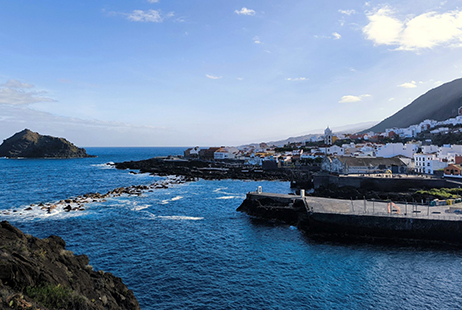
At the regional level, the economic impacts of climate change are significant, with estimated losses of around 250 million euros over the past decade associated with extreme events. In the case of the municipality of Garachico, in the island of Tenerife, damage from coastal flooding amounts to more than €2,000,000 for the period 1996–2024 (Source: CCS), highlighting high structural vulnerability and the need for specific adaptation strategies.
It is within this context that the LIFE Garachico project (LIFE20 CCA/ES/001641) is being carried out, funded by the European Union’s LIFE program (2021–2026), with a budget of €2.64 million (55% European co-financing). The project is coordinated by the regional Government of the Canary Islands and involves a consortium comprising a broad range of institutional, scientific, and technical partners, including the City Council of Garachico, the City Council of Puerto de la Cruz, the Tenerife Island Council, IHCantabria, GRAFCAN, TRAGSA, the University of La Laguna, LNEC (Portugal), EVM, and Elittoral, forming a multi-level partnership capable of addressing the problem from an integrated perspective.
Garachico serves as a pilot case, with replication in Puerto de la Cruz (Tenerife, Canary Is.) and Praia da Vitória (Azores), with the aim of developing a methodological framework that can be transferred to outermost regions of the European Union with similar conditions.
Objectives
The project aims to develop a Strategic Framework for Flexible Adaptation (shown in Fig. 1), based on three pillars: (i) probabilistic risk characterization (hazards, exposure, and vulnerability); (ii) definition of acceptable risk levels; and (iii) progressive implementation of measures based on changes in risk.
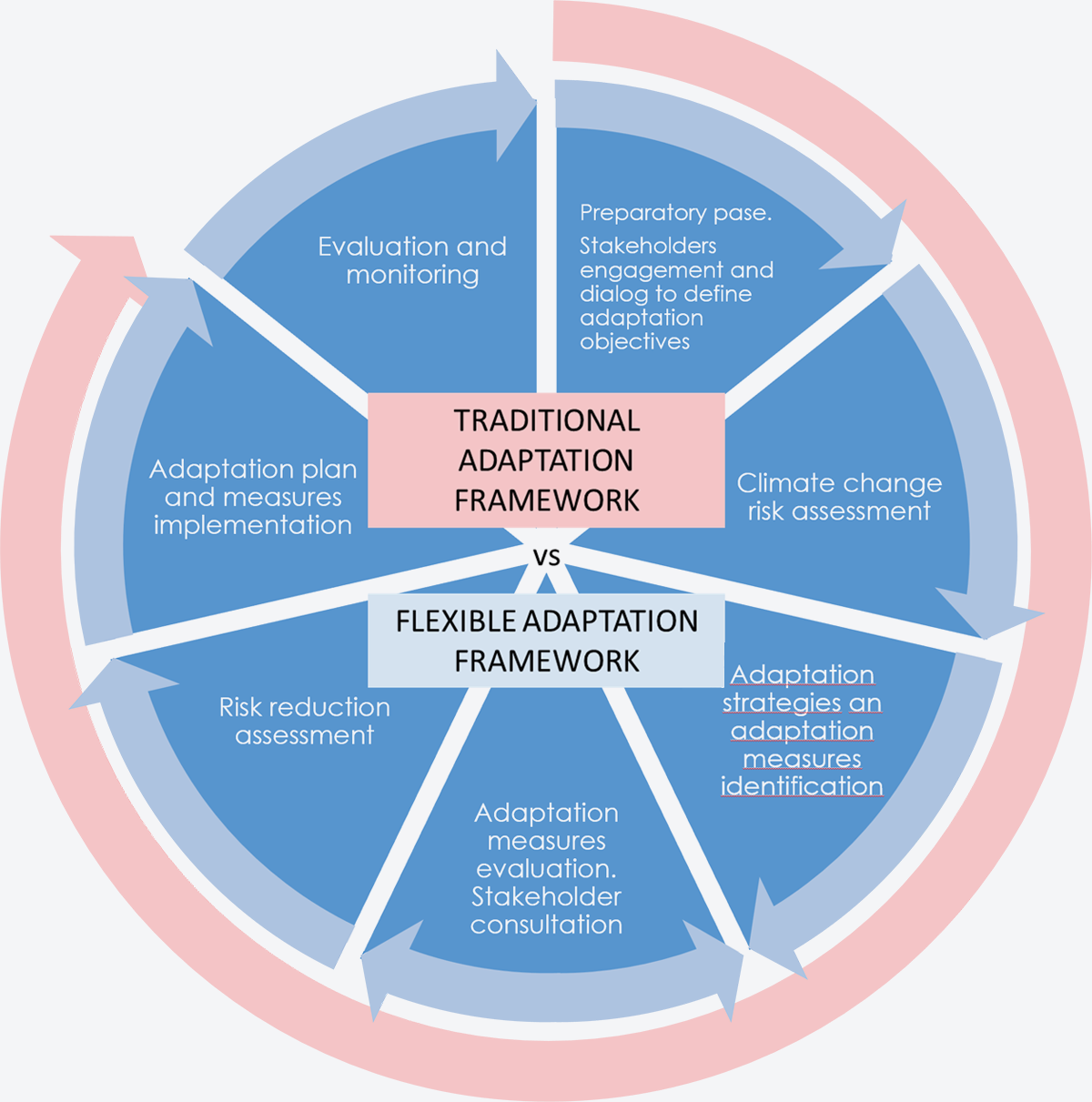
Figure 1. LIFE Garachico Flexible Adaptation Strategic Framework.
Source: Prepared by the LIFE-Garachico project.
This approach aligns with recent adaptive management frameworks under deep uncertainty, which promote dynamic strategies in response to non-stationary climate scenarios. It also incorporates the social dimension of risk by integrating risk perception and acceptance into decision-making, in line with evidence on urban resilience.
Methodological approach
The methodology is based on an integrated approach that combines:
- Hydrodynamic modelling under climate change scenarios (sea level and extreme waves).
- Exposure and vulnerability mapping, including physical and socioeconomic variables.
- Risk assessment using GIS tools and dynamic databases.
- Definition of acceptable risk thresholds through participatory processes.
This approach enables the generation of high-resolution risk maps, and the definition of quantitative indicators (KPIs) associated with the reduction of exposure, vulnerability, and economic damage. Figure 2 shows an example of the risk results obtained in the project.
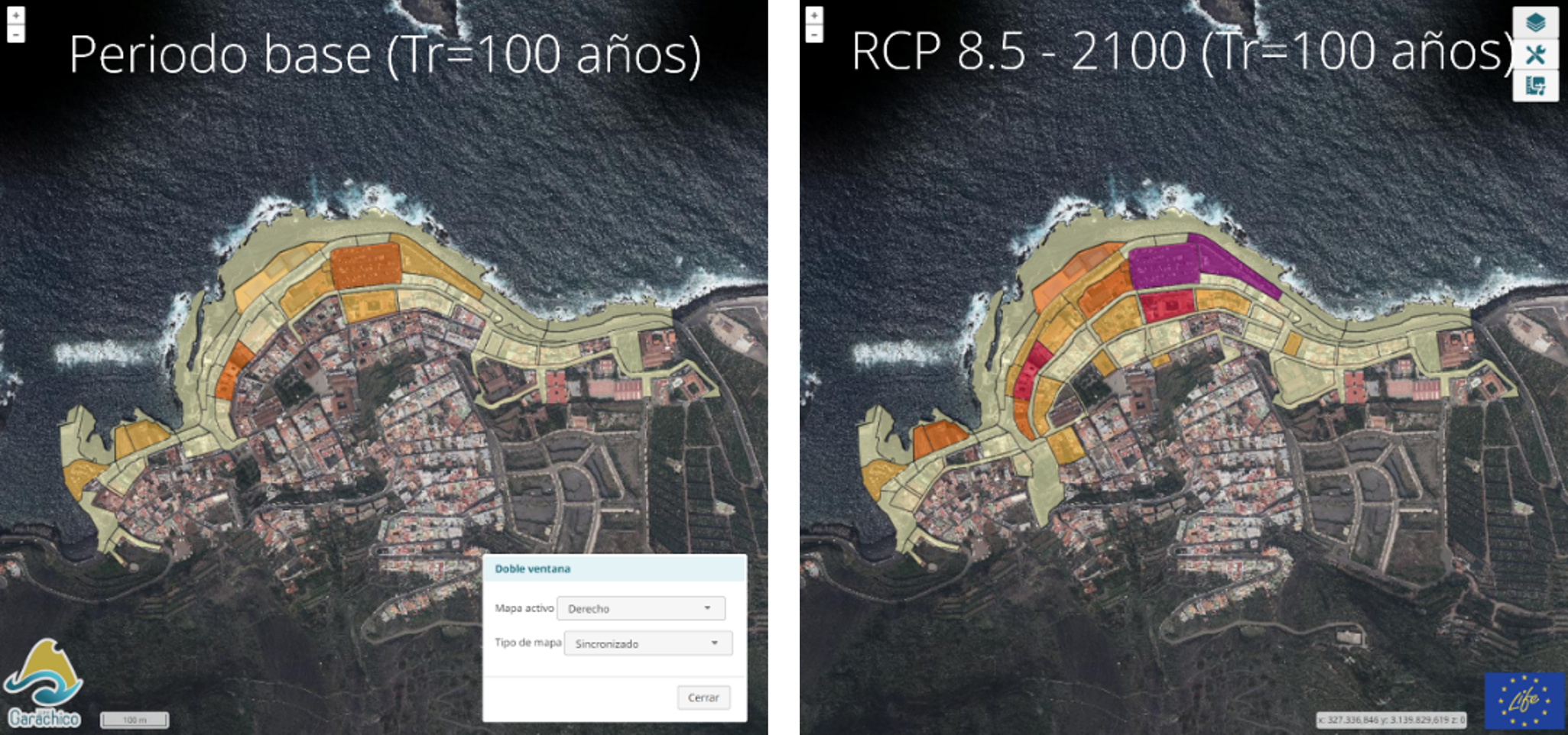
Figure 2. Risk results for Garachico for a storm with a 100-year return period. Baseline scenario (left) and future scenario for the 2100-time horizon and RCP8.5 scenario (right).
Source: Prepared by the authors.
Implementation
The LIFE Garachico project implements an integrated set of measures aimed at reducing the risk of coastal flooding in urban areas, combining technological solutions, physical interventions, and management tools.
First, an early warning system for coastal flooding is being developed, based on the monitoring of oceanographic and meteorological variables (wave height, sea level) using in situ instrumentation (buoys, sensors, and remote observation systems) that allows the system to be calibrated. This system makes it possible to anticipate extreme events and issue warnings well in advance to activate emergency protocols. The literature has shown that early warning systems are one of the most effective measures for reducing vulnerability, as they decrease the temporary exposure of people and property (Basher, 2006).
Second, the project includes lightweight structural adaptation measures tailored to the constraints of the urban environment. These include drainage systems, wave energy dissipation elements (impact-resistant blocks), and urban redesign measures aimed at minimizing the inflow and spread of water during flooding events. This approach moves away from traditional large-scale infrastructure solutions, opting instead for modular and adaptive interventions that are better suited to confined urban environments.
Finally, governance measures are being developed that include not only the establishment of response protocols for extreme events (with procedures for road closures, evacuation, traffic management, and interagency coordination based on information from the early warning system), but also the implementation of training programs and capacity-building initiatives for technical staff, managers, and the local population. These actions are complemented by the development of a digital risk management platform that integrates real-time information, decision-support tools, and access to operational protocols. Taken together, these non-structural measures are key to reducing vulnerability, improving preparedness for extreme events, and strengthening the system’s response capacity.
Results
The results of the project demonstrate the potential of integrated adaptation approaches to reduce the risk of coastal flooding in urban environments.
One of the main achievements is the effective reduction of potential damage through anticipation, thanks to the implementation of an early warning system capable of providing up to 72 hours’ advance notice, depending on the type of event.
Likewise, the project contributes to improved urban resilience, understood as the urban system’s capacity to withstand, absorb, and recover from extreme events. The combination of structural and non-structural measures and warning systems reduces both vulnerability and recovery time following extreme events.
Finally, LIFE Garachico generates a set of scalable tools that can be transferred to other regions, including risk analysis methodologies, protocols for defining acceptable risk levels, and technical guidelines for implementing flexible adaptation strategies. This transferability is particularly relevant in the European context, where there are many coastal cities facing similar challenges.
LIFE AdaptaBlues project: nature-based solutions for risk reduction
Origin and funding
The LIFE AdaptaBlues project (LIFE18 CCA/ES/001160) is being carried out under the European Union’s LIFE program (2019–2024), with approximately 55% co-financing; its objective is to demonstrate the role of nature-based solutions (NbS) in reducing coastal risk.
The project is coordinated by the Institute of Environmental Hydraulics of Cantabria (IHCantabria) and involves an international consortium comprising the following partner beneficiaries: the municipality of Figueira da Foz (Portugal), the Polytechnic Institute of Leiria (Portugal)—through MARE-IPLeiria—and The Nature Conservancy in Europe gGmbH (Germany); forming a partnership that combines expertise in hydrodynamic modelling, estuarine ecology, land management, and the development of innovative financial mechanisms.
LIFE AdaptaBlues is set against a backdrop of widespread degradation of European coastal ecosystems, which has reduced their ability to protect against flooding and erosion. The analysis focuses on three representative Atlantic regions (Cantabria, Coimbra, and Zeeland) with the aim of generating transferable knowledge on the role of estuarine ecosystems in climate change adaptation.
In this context, the project proposes integrating ecosystem restoration and conservation as part of adaptation strategies, complementing traditional infrastructure.
Objectives
The overall objective is to demonstrate that the restoration and conservation of estuarine ecosystems is an effective strategy for reducing coastal risk.
Specifically, the project aims to: (i) quantify the role of ecosystems, such as salt marshes and seagrass beds, in reducing flooding and erosion through the assessment of ecosystem services; (ii) explore financial mechanisms to support their restoration based on the benefits generated; and (iii) promote the implementation of NbS as a complement or alternative to conventional solutions.
This approach aligns with scientific evidence identifying coastal ecosystems as natural barriers against extreme events (Ondiviela et al., 2014).
Methodological development
The project develops an integrated methodological framework based on four components:
- Flood modelling with and without vegetation to quantify reductions in wave energy and flood levels.
- Risk assessment under climate change scenarios, incorporating sea-level rise and changes in the frequency and intensity of extreme events.
- Cost-benefit analysis of ecosystem services, including damage reduction and co-benefits (blue carbon, biodiversity, water quality).
- Development of standardized protocols to facilitate replicability and integration into coastal planning (Fig. 3).
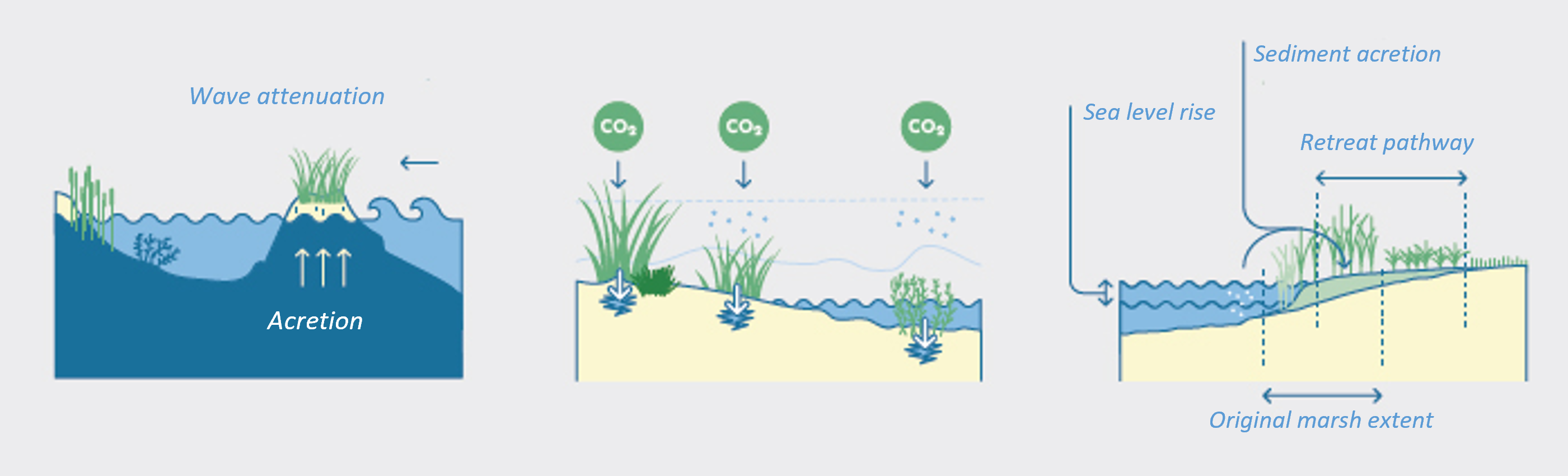
Figure 3. Development of standardised protocols for analysing the protection service, carbon sequestration, and sediment accretion and migration capacity of ecosystems.
Source: Prepared by the authors.
This approach allows for the explicit quantification of the contribution of NbS to risk reduction in both physical and economic terms.
Implementation
The project includes pilot initiatives aimed at validating the effectiveness of NbS under real-world conditions. The main intervention involves the restoration of salt marshes in the Mondego estuary (Portugal) through the experimental planting of degraded vegetation communities across different tidal zones, thereby analysing their potential response to changes in flooding patterns associated with sea-level rise.
These actions promote sediment accretion, reduce erosion, and increase the capacity to adapt to sea-level rise, in addition to generating ecological benefits and contributing to carbon sequestration. To test this hypothesis, specific standardized protocols have been developed to quantify these ecosystem services, for which five European Atlantic estuaries—located in the regions of Coimbra, Cantabria, and Zeeland—have been monitored.
In addition, catalogues of adaptation measures for Atlantic estuarine systems are being developed, incorporating nature-based and hybrid solutions, and providing operational tools for managers.
The project also incorporates participatory and governance processes, involving public administrations, the private sector, and civil society in the design and implementation of measures (Fig. 4). These actions, together with training programs, facilitate knowledge transfer and improve social acceptance of the solutions.
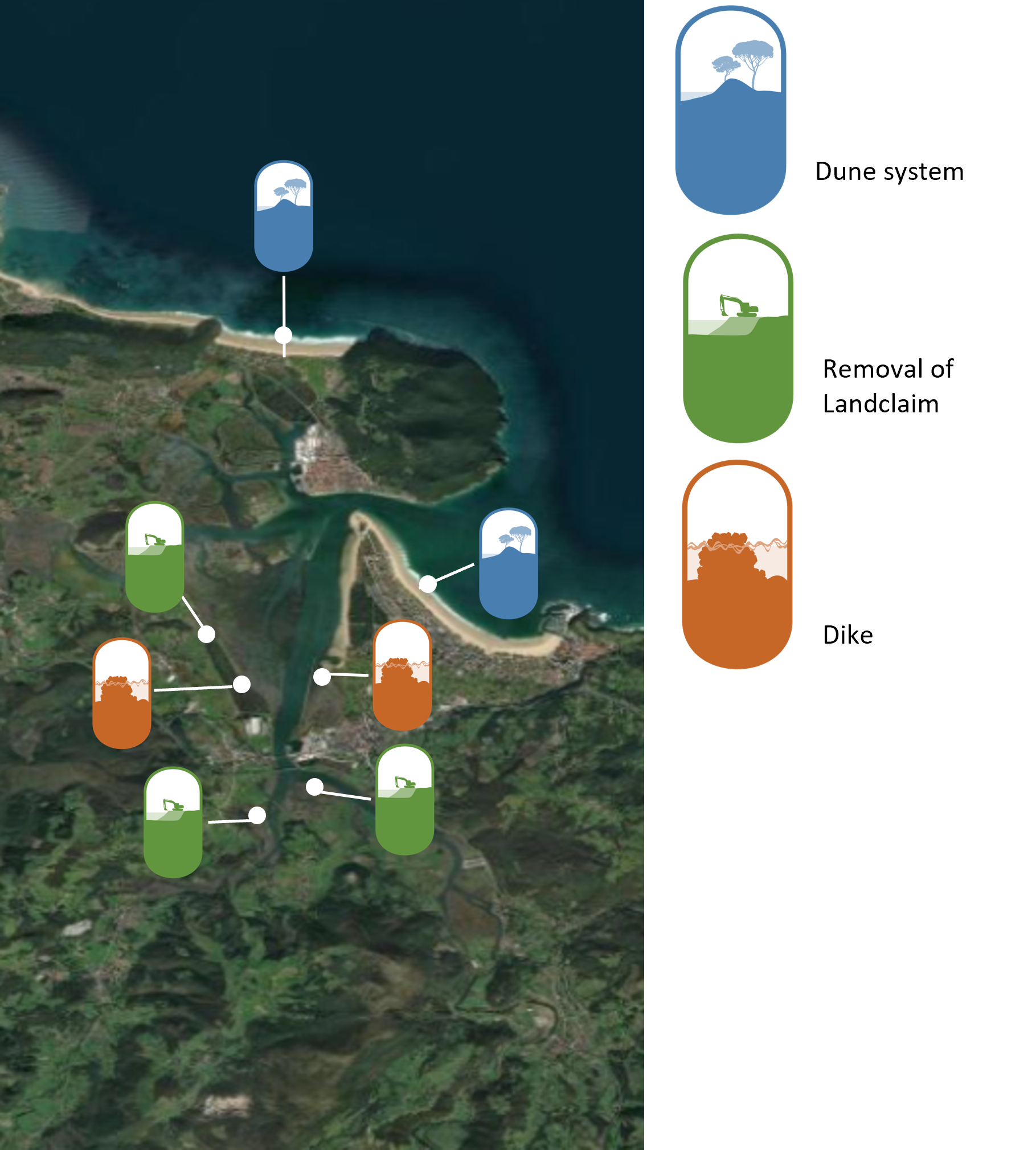
Figure 4. Proposed adaptation measures for the Santoña Marshes estuary resulting from participatory processes in Cantabria.
Source: Prepared by the authors.
Results
The results provide quantitative evidence of the effectiveness of NbS in reducing coastal risk and demonstrate the ability of estuarine ecosystems to dissipate wave energy, reduce flood levels, and simultaneously contribute to climate change mitigation through carbon sequestration.
One of the project’s main achievements is the development of standardised tools and protocols for assessing the coastal protection and carbon sequestration services associated with estuarine ecosystems. Based on the results obtained, and on a retrospective analysis of the evolution of estuarine communities, it has been possible to quantify the reduction in flood risk and the increase in carbon sequestration resulting from the marshland restorations carried out along the coast of the Iberian Peninsula over the past 20 years.
The project also develops flood risk assessment tools and maps for the Mondego and Lisbon estuaries (Portugal), Huelva, Oyambre, Santander Bay, and Santoña (Spain), and the Seine (France), which explicitly incorporate the contribution of ecosystems under various climate scenarios, thereby supporting evidence-based decision-making.
Finally, transferable methodologies and technical recommendations are developed, including protocols and guidelines for the implementation of NbS in other European contexts, facilitating their scalability and integration into adaptation strategies.
The value of CCS data in risk analysis and its implications for the insurance sector in the LIFE Garachico and LIFE AdaptaBlues projects
Quantifying climate risk requires the coherent integration of hazard, exposure, and vulnerability (IPCC, 2021). Although advances in hydrodynamic modelling have improved the characterization of hazards, the robust estimation of economic impacts remains a challenge due to the limited availability and quality of damage data (Ward et al., 2020).
In this context, CCS constitutes a unique source at the European level, providing systematic series of actual economic losses associated with extreme events. Unlike modelled estimates, these data reflect indemnified damages, allowing for improved model calibration and validation and reducing uncertainty in risk estimation. Their use facilitates the transition towards probabilistic and evidence-based approaches.
In the projects analysed, CCS acts as a link between physical modelling and economic assessment. In LIFE Garachico, the integration of loss data supports the definition of acceptable risk levels, a central element of the flexible adaptation framework. In LIFE AdaptaBlues, this data is key to quantifying the economic benefits of nature-based solutions, as it allows for estimating the effective reduction in damage associated with hazard mitigation.
Furthermore, the use of empirical data helps bridge the gap between physical risk analysis and its translation into economic metrics useful for decision-making. This integration is essential for evaluating the effectiveness of adaptation measures and justifying their implementation from a cost-benefit perspective.
The implications for the insurance sector are significant. First, the combination of advanced modelling and observed data improves the estimation of expected losses, reducing uncertainty in pricing and risk management. Second, it facilitates the development of insurance products linked to adaptation, including instruments that recognize the risk reduction resulting from structural and nature-based measures. In this regard, the literature highlights the potential of parametric insurance and mechanisms linked to ecosystem services (Surminski et al., 2016).
Finally, CCS plays a strategic role in the transition towards climate resilience models by integrating loss data, technical knowledge, and compensation mechanisms. Its function goes beyond indemnification, acting as a generator of knowledge and a facilitator of decision-making (Consorcio de Compensación de Seguros, 2022).
Comparison of approaches and lessons learned in coastal adaptation
The LIFE Garachico and LIFE AdaptaBlues projects represent complementary approaches to coastal adaptation: engineering-based structural adaptation and ecosystem-based adaptation using nature-based solutions (NbS).
The structural approach, exemplified by LIFE Garachico, focuses on directly reducing hazard and vulnerability through physical interventions and operational tools, such as early warning systems, providing immediate responses in highly exposed urban environments. On the other hand, NbS, as in LIFE AdaptaBlues, primarily address hazards through the restoration of ecosystems (mangroves, seagrass beds), which reduce wave energy, promote sediment accretion, and provide dynamic protection against flooding, in addition to generating co-benefits such as carbon sequestration and improved biodiversity (Barbier et al., 2011; Changsoon et al., 2021).
The two approaches differ in terms of cost, uncertainty, and social acceptance. Structural solutions require higher initial investments but offer more predictable outcomes, whereas NbS involve lower costs and greater long-term benefits, albeit with greater uncertainty under extreme conditions. In general, NbS show greater social acceptance. However, scientific evidence points to their complementarity. Hybrid systems, which combine grey and green infrastructure, allow for maximising risk reduction by integrating robustness and adaptability (Bridges et al., 2021).
Key lessons include: (i) the importance of integrating insurance data to improve economic risk assessment; (ii) the need for systemic approaches that consider the interaction between hazard, exposure, and vulnerability (IPCC, 2021); and (iii) the key role of the participation of managers, technical experts, and society in the acceptance of measures. Challenges associated with climate uncertainty, scalability, and institutional barriers persist, however. Taken together, these results reinforce the need for integrated, flexible, and evidence-based strategies to improve coastal resilience.
Conclusions
The LIFE Garachico and LIFE AdaptaBlues projects are prime examples of the role of European programmes as laboratories for innovation in climate change adaptation. Both projects demonstrate the viability of advanced approaches to coastal risk reduction, based on the integration of modelling, empirical data, and multi-stakeholder participation, with direct implementation in the field.
One of the main findings is the evidence of the key role of public-private collaboration in climate risk management. The joint participation of public administrations, research centres, the private sector, and insurance companies allows the problem to be addressed from a multidisciplinary perspective, improving the quality of analyses and the effectiveness of the implemented solutions.
Furthermore, the projects highlight the need to scale up these methodologies, both geographically and across sectors. Although the pilot results are positive, their impact will depend on the ability to integrate them into public policies, regulatory frameworks, and investment strategies. In this regard, the standardisation of methodologies, the availability of data, and the incorporation of economic risk metrics are key elements in facilitating this transition.
Overall, the experience of both projects reinforces the need to move toward integrated, flexible, and evidence-based approaches that combine structural, nature-based, and financial solutions, with the aim of improving resilience in the face of growing climate risk.
References
Barbier, E.B., Hacker, S.D., Kennedy, C., Koch, E.W., Stier, A.C. & Silliman, B.R. (2011). The value of estuarine and coastal ecosystem services. Ecological Monographs, 81(2), pp. 169–193. https://doi.org/10.1890/10-1510.1(A new window will open)
Basher, R. (2006). Global early warning systems for natural hazards. Philosophical Transactions of the Royal Society A, 364, pp. 2167–2182. https://doi.org/10.1098/rsta.2006.1819(A new window will open)
Changsoon, C. et al. (2021). The climate benefits, co-benefits, and trade-offs of green infrastructure: A systematic literature review. Journal of Environmental Management, 291, 112583. https://doi.org/10.1016/j.jenvman.2021.112583(A new window will open)
Ciscar, J.C. et al. (2018). Climate impacts in Europe: Final report of the PESETA III project. European Commission. https://joint-research-centre.ec.europa.eu/projects-and-activities/peseta-climate-change-projects/jrc-peseta-iii_en(A new window will open)
Cohen, E. et al. (2016). Nature-based solutions to address global societal challenges. IUCN. https://portals.iucn.org/library/node/46191(A new window will open)
Consorcio de Compensación de Seguros. (2022). Informe anual 2022. CCS. https://www.consorseguros.es/documents/10184/0/INFORME_ANUAL_2022_DEFINITIVO/684d1749-8196-63c6-75e1-82917a590e90(A new window will open)
EEA. (2006). The changing faces of Europe’s coastal areas. European Environment Agency. https://www.eea.europa.eu/publications/eea_report_2006_6(A new window will open)
EEA. (2023). Economic losses from climate-related extremes in Europe. European Environment Agency. https://www.eea.europa.eu(A new window will open)
Haasnoot, M., Kwakkel, J.H., Walker, W.E. & ter Maat, J. (2013). Dynamic adaptive policy pathways: A method for crafting robust decisions for a deeply uncertain world. Global Environmental Change, 23(2), pp. 485–498. https://doi.org/10.1016/j.gloenvcha.2012.12.006(A new window will open)
Hallegatte, S., Green, C., Nicholls, R.J. & Corfee-Morlot, J. (2013). Future flood losses in major coastal cities. Nature Climate Change, 3, pp. 802–806. https://doi.org/10.1038/nclimate1979(A new window will open)
Hinkel, J. et al. (2014). Coastal flood damage and adaptation costs under 21st century sea-level rise. PNAS, 111(9), pp. 3292–3297. https://doi.org/10.1073/pnas.1222469111(A new window will open)
IPCC. (2021). Climate Change 2021: The Physical Science Basis. Cambridge University Press. https://doi.org/10.1017/9781009157896(A new window will open)
LIFE AdaptaBlues. (2019). Technical Application Form – LIFE18 CCA/ES/001160. https://lifeadaptablues.eu/es/(A new window will open)
LIFE Garachico. (2021). Technical Application Form – LIFE20 CCA/ES/001641. https://lifegarachico.eu/(A new window will open)
Merz, B. et al. (2010). Assessment of economic flood damage. Natural Hazards and Earth System Sciences, 10, pp. 1697–1724. https://doi.org/10.5194/nhess-10-1697-2010(A new window will open)
Molinari, D. & Scorzini, A.R. (2017). On the Influence of Input Data Quality to Flood Damage Estimation: The Performance of the INSYDE Model. Water, 9(9), 688; https://doi.org/10.3390/w9090688(A new window will open)
Narayan, S. et al. (2017). The value of coastal wetlands for flood damage reduction in the Northeastern USA. Scientific Reports, 7, 9463. https://doi.org/10.1038/s41598-017-09269-z(A new window will open)
Ondiviela, B. et al. (2014). The role of seagrasses in coastal protection in a changing climate. Coastal Engineering, 87, pp. 158–168. https://doi.org/10.1016/j.coastaleng.2013.11.005(A new window will open)
Surminski, S., Bouwer, L.M. & Linnerooth-Bayer, J. (2016). How insurance can support climate resilience. Nature Climate Change, 6, pp. 333–334. https://doi.org/10.1038/nclimate2979(A new window will open)
Temmerman, S. et al. (2013). Ecosystem-based coastal defence in the face of global change. Nature, 504, pp. 79–83. https://doi.org/10.1038/nature12859(A new window will open)
Ward, P.J., Jongman, B., Aerts, J.C.J.H., Bates, P.D., Botzen, W.J.W., Diaz Loaiza, A., Hallegatte, S., Kind, J.M., Kwadijk, J.C.J., Scussolini, P. & Winsemius, H.C. (2020). A global framework for future costs and benefits of river-flood protection in urban areas. Nature Climate Change, 10, pp. 203–209. https://www.nature.com/articles/nclimate3350(A new window will open)
At the regional level, the economic impacts of climate change are significant, with estimated losses of around 250 million euros over the past decade associated with extreme events. In the case of the municipality of Garachico, in the island of Tenerife, damage from coastal flooding amounts to more than €2,000,000 for the period 1996–2024 (Source: CCS), highlighting high structural vulnerability and the need for specific adaptation strategies.