Multi-peril Agricultural Insurance: Experience and Commitment
Executive President of Agroseguro
Year after year, extreme weather, geological, and political and social events highlight the vulnerability faced by people and property in today’s society. A year has just gone by since one particular event, this one a weather event. I am, of course, talking about the floods that devastated part of the Mediterranean coast of Spain on 29 October 2024.
This article focuses on the storm’s effects on the crop and livestock raising industry and on the response by the insurance sector, but to provide some context, it should be emphasised that the storm mainly impacted urban areas.
It is common knowledge that Spain as a country has certain exceptional public-private partnership-based insurance mechanisms for tackling extraordinary events that have garnered international acclaim. One is the system for covering Extraordinary Risks operated by Consorcio de Compensación de Seguros, in the sphere of personal and general insurance other than crop and livestock production, one of that entity’s many tasks. The other is the Multi-peril Agricultural Insurance scheme, consisting of co-insurance provided by insurance entities grouped together under the umbrella of Agroseguro, also supported by Consorcio’s acting as reinsurer.
Both systems had to be activated in the wake of the Valencia Floods, but Consorcio obviously has borne the brunt of dealing with the most severe extraordinary event in its history, both in the number of claims and in economic terms, no less than between 5 and 10 times greater than the levels recorded for such earlier events as the floods in the Basque Country in August 1983, the Cyclone Klaus in January 2009, or the Lorca (Murcia) earthquake of May 2011. And the most important and most regrettable aspect of this episode, the extremely large number of victims, surpassing the terror attack on 11 March 2004, which has required especially sensitive handling by Consorcio.
Just one year later, apart from some loose ends still pending at the time of this writing, Consorcio has completed its share of the task, to the tune of nearly 5,000 million euros. As in earlier cases, it has benefited from the invaluable cooperation of the entire insurance sector, but the fact is that Consorcio has outdone itself and has demonstrated two things: one, that it is extremely effective and that its existence is an absolute necessity; and two, the need to amass reserves has shown itself to be fully justified, and indeed there is no guarantee that the reserves will be enough. Therefore, my express recognition and wholehearted congratulations go out to Consorcio and its leaders, something I say with pride, because I too was once a part of that organisation.
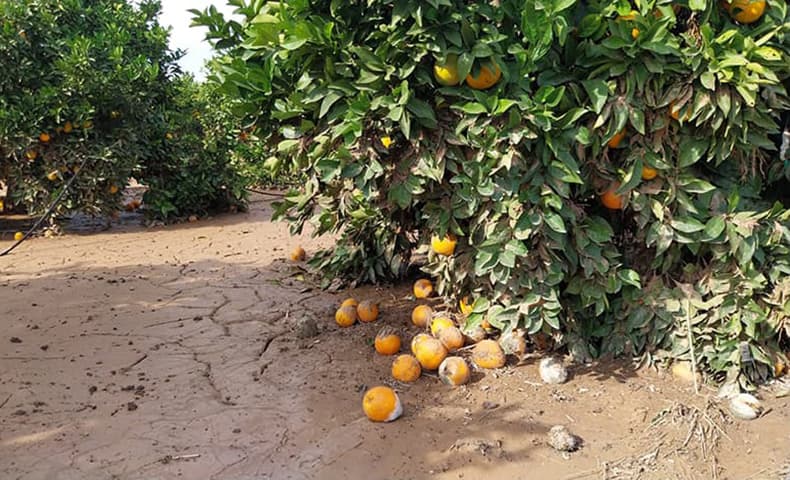
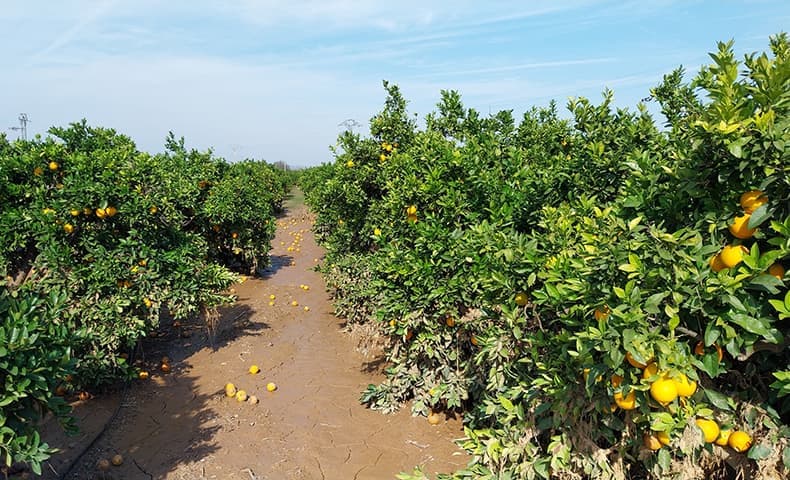
That being said, the Valencia Floods also hit the countryside very hard. The multi-peril agricultural insurance scheme has faced events that have resulted in higher losses and more claims, recent examples being the frosts in 2022 and the intense drought in 2023, but this case was the worst single storm in the scheme’s long history. Torrential rains, hail, and hurricane-force winds are capable of wiping out the work of an entire year and of affecting thousands of crop and livestock farmers over large swathes of our country. And this is what happened in late October 2024 in the Region of Valencia and in Castile-La Mancha, though the initial effects of the cut-off low causing all this havoc had already been making themselves felt in the Province of Almería a few hours earlier.
A year later, remembering these events is still painful, but it is also crucial to reflect on the mechanisms set in motion by Agroseguro and the other participants in the multi-peril agricultural insurance scheme in the hours, days, and weeks that followed, to be able to drawn on the experience and refine procedures so that the next time weather conditions put us in a similar, or worse, bind our response can be even more effective.
After operating for four and a half decades, the multi-peril agricultural insurance scheme obviously has faced many historical events – droughts, storms, frosts – and has considerable experience in handling massive losses under its belt, which enables Agroseguro to set loss adjustment and support for its insured in motion without delay. We learn something from each event, and we have to keep moving forward, because unfortunately the climate is constantly one-upping itself.
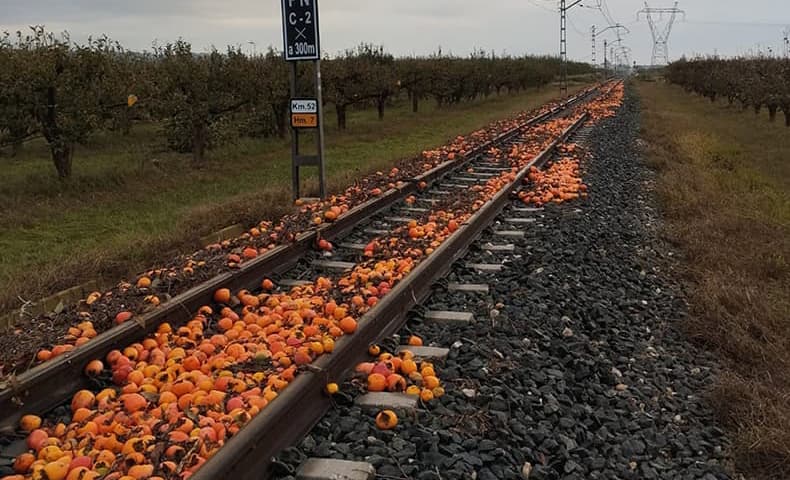
What are the main features of the October 2024 Valencia Floods, and what are its key management aspects? First and foremost, its scale. In human terms, that goes without saying, but also in economic and geographic terms. This weather event caused severe damage in various parts of the Iberian Peninsula, but in the Province of Valencia alone, the damage was spread over an extremely large area, with the wind, the heavy rainfall, and the hail impacting farms in a number of towns, many of them some distance from the areas where the most personal injuries and property damage occurred. Some 25,500 hectares of farmland were affected, and what is even more significant, more than 50,000 farms, all of which had to be appraised one by one as soon as possible with no loss of technical precision.
The second key issue was technology. From the day following the storm, new technologies and software implemented by Agroseguro in recent years enabled us to draw up a first approximate map of the areas that might have been affected and to start initial planning to deploy the loss adjusters that would be needed. The experience and knowledge of the terrain and the regional structure of farming accumulated by the staff at our regional offices were also pivotal for this.
A third issue to be mentioned was communications, a key factor not only for expediting processing but also for helping to alleviate the havoc, the fear, and the uncertainty arising from the situation. As soon as we were informed of the severity of the damage that had occurred, we sent out messages to the regional governments of Valencia, Castile-La Mancha, and Andalusia; to the Ministry of Agriculture, Fisheries, and Food; and to industry representatives urging peace of mind in three respects: at the most fundamental level, all the damage from hail, rainfall, wind, or floods was covered by the multi-peril agricultural insurance scheme; that all claims for losses, would be processed irrespective of when they were filed, because we realised that it would not be feasible to reach all the holdings right away; and that the local network of loss adjusters, clearly inadequate in view of the scale of what had happened, would be reinforced so that all the farms affected could be visited. Naturally, we stayed permanently in touch with the 16 entities that were associated with us as co-insurers, to keep tabs on the circumstances of all the clients, both theirs and ours.
Over the following days press releases were issued, and we answered nearly a hundred inquiries from media outlets. Also, all contact channels were buttressed – telephone, email, and the website, where a special information section was opened. We were also in permanent contact with local farm organisations and cooperatives to gather and share information on the Valencia Floods’ impact on the industry, and we explained the arrangements Agroseguro had made to be able to tackle the complicated task of appraising the damage as quickly as possible to the Department of Agriculture, Water, Livestock Farming, and Fisheries of the Regional Valencia Government and to the Regional Government Department Secretary himself at meetings held both online and in person.
Appraising the damage: 10,000 crop and livestock farmers affected
The circumstances required a certain amount of guesswork because of the tremendous difficulty entailed, early on, in determining the actual impact of the Valencia Floods and the possible scenarios we could be facing, even in the knowledge that the affected area was extremely large, which made it necessary to set up powerful yet flexible mechanisms, in particular in respect of deploying loss adjusters, something that in the interest of efficiency could not be done just like that.
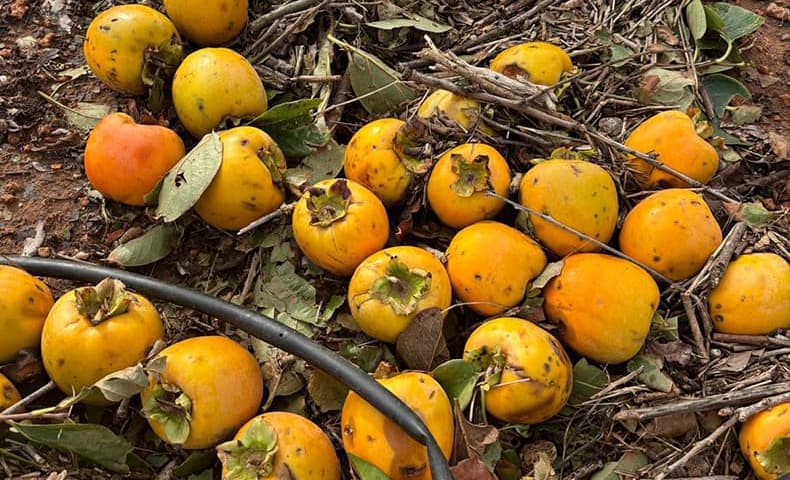
Agroseguro set to work on speeding up procedures and on attaining the quality of service required. We concentrated our first efforts on assessing farms with crops that were ready for harvest as soon as possible in order to inject liquidity into the sector right away and to help farmers bring their undamaged produce to market. For instance, on the date of the event only a small portion of the persimmon crop in Valencia had already been harvested; most was still on the tree exposed to the high winds, rain, and hail. Fast appraisal of the damage by Agroseguro was extremely important, because persimmons are one of Valencia’s main crops.
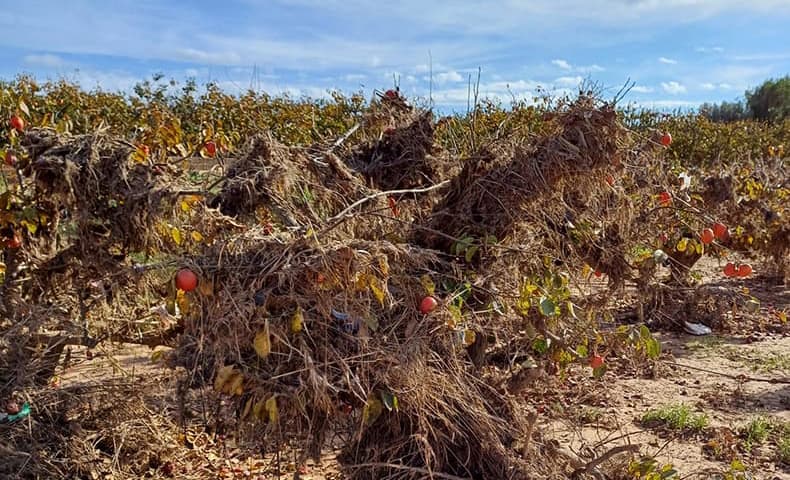
After the persimmon crop, attention shifted to appraising the damage on the other crops, namely, wine grapes, which had already been harvested, but the vines had been swept away by the surging floodwaters, vegetable crops, and plant, not to mention citrus fruit crops. Assessing the damage took until late March, when the last farms affected by the Valencia Floods brought in their harvests of the last of the late-season crop varieties.
Assessment of the damage began in the week of 4 November, and the first 10 million euros had been paid out by the 28th, barely a month after the storm. A very short time in view of the problems the affected parties encountered in preparing and submitting their claims and the difficulties we faced in starting the loss adjustment process, because at first many farms simply could not be reached, and even just travel was extremely complicated. For many farmers the compensation paid out by Agroseguro was the first income they had had since the disaster.
In all, 10,000 crop and livestock farmers were affected, and compensations ultimately reached 60 million euros. That figure is a far cry from the personal injury, property damage, and business interruption losses Consorcio has had to deal with, but still it demonstrates the exceptional nature of that weather event in our case, which produced that level of losses in just a few hours.
At the same time, we need to acknowledge, and appreciate, that the sector has recognised our efforts in respect of communication, processing, loss adjustment, and payment of compensation and that several of those facets have garnered very high approval ratings, not least the speed of our payouts.
Commitment by our loss adjusters
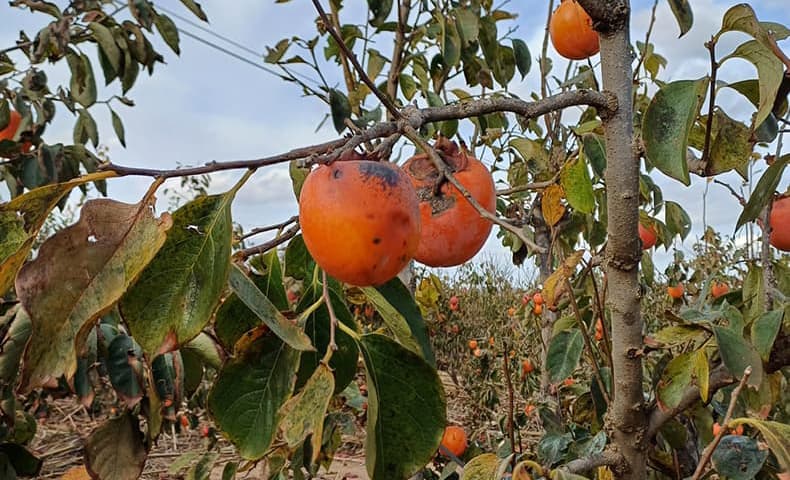
In addition to the thirty-odd loss adjusters ordinarily based in the Region of Valencia, more than a hundred others were sent in from all over mainland Spain and even the Canary Islands, and at the same time Agroseguro employees were seconded from their posts in Madrid, Catalonia, Aragón, and Castile-La Mancha to help coordinate the work. All this was done in extremely tough logistical conditions in the face of transport networks and communications channels that had been cut off. For that reason, we are grateful to the loss adjusters for their patience and commitment; they had to suffer through not only farms that were under water or smothered in mud but also traffic jams that were completely atypical for Valencia and many roads that had been damaged or made impassable. Many loss adjusters took it upon themselves to set up base in lodgings located in towns that were far away from Valencia proper but were near to the main affected areas, so that they could reach the farms faster and more easily. They sometimes had to appraise losses on farmland where there was practically nothing left, not a single plant or tree, or where mud had been piled up to considerable height. Beyond that, the loss adjusters even gave rides to the insured out to their farms, since many of them had lost their own vehicles to the storm. The loss adjusters heard them out, offered them sympathy, and put themselves out to provide our insured with the best possible service at a time that was filled with difficulties, emergencies, and emotions running high. It could almost be said that the technical issues connected with the appraisals were the least part of it, because as I have said, here at Agroseguro we have extensive experience in assessing damage caused by heavy storms and in complex, large-scale loss adjustment operations.
Royal Decree Law 7/2024
In addition to the insurance response itself, the Ministry of Agriculture, Fisheries, and Food tasked Agroseguro with identifying the farmers affected over the entire area impacted by the floods, both insured and uninsured, for inclusion in the Spanish Royal Decree Law 7/2024, of 11 November, adopting urgent measures to promote the Immediate Response, Reconstruction and Relaunch Plan in response to the damage caused by the floods.
That Act specifically provided that the status of beneficiary was to be determined after “an assessment of the loss by the Entidad Estatal de Seguros Agrarios (ENESA) [Spain’s National Farm and Agricultural Insurance Agency] based on expert reports furnished by Agroseguro on both insured and uninsured farms and properties”.
At this point, it seems to me appropriate to point out that the government authorities in Spain have always defended the need for insurance and its usefulness and that they all use budget allocations to promote the purchase of insurance by subsidising a substantial part of the cost, that overall is almost 50%. For that reason, in normal circumstances public funds are not used for direct subsidies for insurable crops and livestock.
However, the circumstances in this case were not normal. The exceptional nature of what took place in October 2024 and its economic impact compelled the authorities to take exceptional measures for uninsured farmers, because they could not run the risk of compromising the recovery of a segment of the economy as important as the primary sector in Valencia. The impact of making special funds available to help insured and uninsured farms get back up and running had implications that went beyond crop and livestock farming per se; it also meant preserving the economic activities of businesses that supported the agriculture industry, dealerships, transport companies, shops, and the like. That is to say, recovery of the primary sector with the least possible disruption in the shortest possible time goes far beyond farming itself.
The work undertaken by Agroseguro in carrying out the tasks it was assigned under Spanish Royal Decree Law not only required deploying an outside call centre with more than 200 operators but also bringing to bear the experience and management skills of Agroseguro’s employees and sizeable technical support to be able to draw up the boundaries of the region that has been termed “ground zero”: the contiguous, unbroken areas consisting of municipalities that were able to prove severe damage amounting to more than 40% over the lion’s share of their farms. GIS tools were used for this, and the first field measurements were taken by two leading outside remote sensing companies (AriSat and VisualNace).
Some 40,000 potentially affected parties were contacted, and where appropriate appraisals in the field were assigned to professional loss adjusters. Thanks to their unceasing work and commitment, they were able to meet the very strict deadline set in the Spanish Royal Decree Law, and nearly all the work and the reports were completed just a very few weeks after the floods.
Conclusions and acknowledgements
The October 2024 flood was undoubtedly a highly singular event for the multi-peril agricultural insurance scheme, one that will serve as an example. First, because of the circumstances surrounding the damage that had been caused: its extent, the number of people affected, the time when it took place (at harvest time for some crops), and the problems connected with location, access, and mobility, all of which cast light on the need for suitable planning that combined urgency and efficiency.
Furthermore, because of the context, all response activities had to go hand in hand with special sensitivities – I myself saw how moved everyone who took part in this work was, in particular our local staff – , as a result, good communication, empathy, and compassion took on great importance and contributed to allaying the tremendous uncertainty that hovered over every aspect.
The same was true for the losses that were processed by Consorcio de Compensación de Seguros, but on a much larger scale. It was an exceptional and unprecedented event, and what is more, the person primarily responsible for dealing with the aftermath, CCS’ Director of Operations, had been newly appointed. A true baptism of fire!
I am convinced that the responses of both institutions lived up to expectations, just like those of the insurance entities, insurance brokers, loss adjusters, and ultimately the insurance industry as a whole. And I am sure that, a year later, confidence in insurance has grown, and the experience will make us into even more of a bellwether for international observers.
The takeaway that can be drawn is that the key factors consisted of identifying and implementing suitable procedures for handling mass claims, including cooperation by the industry, and of listening and attending to the parties that had suffered losses with the utmost empathy and concern. Furthermore, the importance of taking coordinated action vis-à-vis the authorities and in our case the co-insurers should not be overlooked.
I would like to express our thanks to the managers and staff of our co-insurers and their sales networks for their work in the weeks after the Valencia Floods and also to our loss adjuster partners who came from all corners of Spain to appraise the damage. Special thanks to all Agroseguro’s employees is in order, especially to our colleagues in our southeast Spain regional headquarters, who were impeccable in the performance of their duties after the tragedy.
Lastly, I would like to emphasise, on behalf of Agroseguro, that our hearts go out to all the parties who were affected by the cut-off low-induced floods, especially those who suffered irreparable loss.
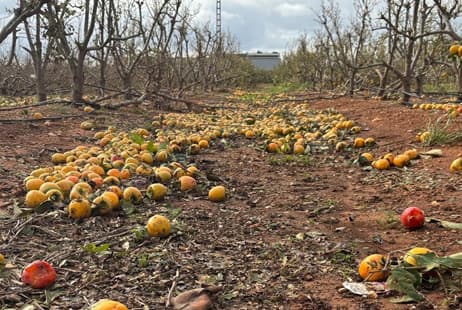
For many farmers the compensation paid out by Agroseguro was the first income they had had since the disaster.
In all, 10,000 crop and livestock farmers were affected, and compensations ultimately reached 60 million euros. That figure is a far cry from the personal injury, property damage, and business interruption losses Consorcio has had to deal with, but still it demonstrates the exceptional nature of that weather event in our case, which produced that level of losses in just a few hours.